
Cooking Guides · Guide
How to Cook Perfect Rice: Rice Cooker, Stovetop and Leftover Tips
Rinsing, ratios and resting: a practical guide to cooking rice well in a rice cooker or a pan, and storing leftovers safely.
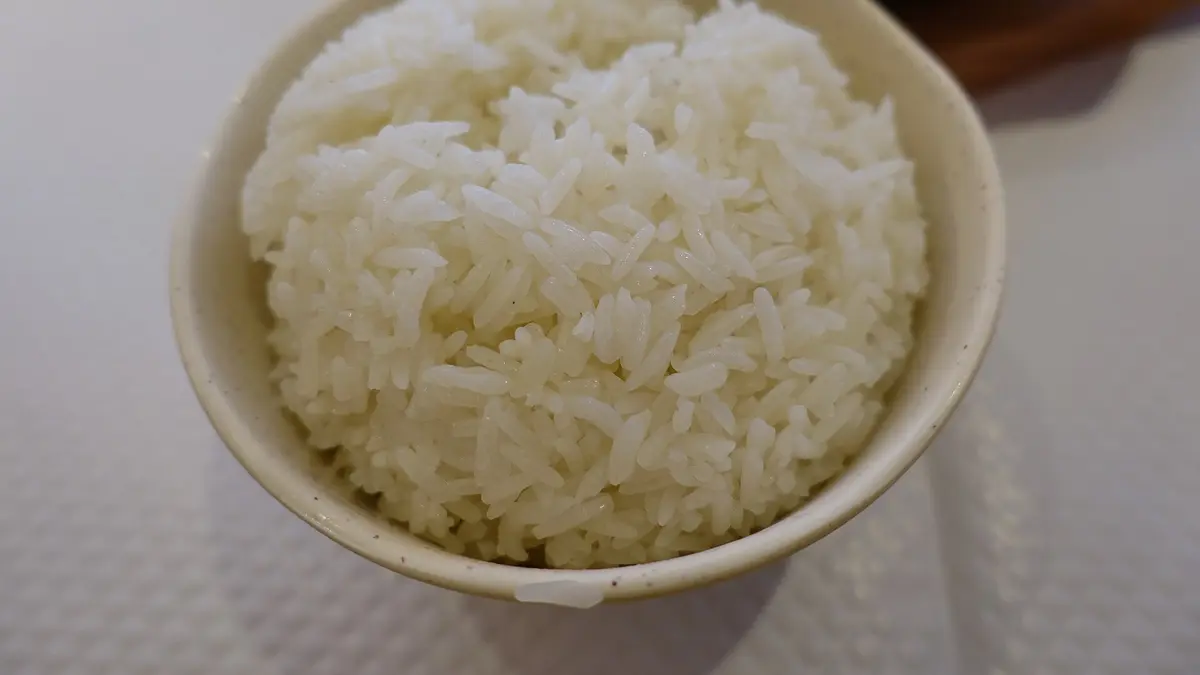
In Indonesia, a meal without rice often does not feel like a meal at all, and plain steamed rice (nasi putih) is the quiet centre of the table. Getting it right is not difficult, but small details make the difference between rice that is fluffy and fragrant and rice that is gluey, hard or scorched. This guide covers choosing rice, rinsing, water ratios, the rice cooker and stovetop methods, how to prepare rice for fried rice, and how to store cooked rice safely.
Choosing your rice
Most Indonesian households cook white long-grain or medium-grain rice. Indonesians often describe rice texture with two words: pulen, meaning soft, slightly sticky and tender, and pera, meaning drier with separate grains. Most people prefer pulen rice for everyday eating, while pera rice is sometimes favoured for fried rice.
Outside Indonesia, Thai jasmine rice is the closest everyday match. Other types behave differently:
- Basmati is drier and more separate; it works but needs less water.
- Short-grain Japanese-style rice is stickier and more clinging than typical Indonesian rice.
- Brown and red rice need more water and a longer cooking time.
- Glutinous rice (ketan) is a different ingredient used for sweets and snacks, usually soaked and steamed rather than boiled.
Rinsing
Rinse white rice before cooking. Put it in a bowl or the rice cooker pot, cover with cold water, swirl with your hand and pour off the cloudy water. Repeat two or three times until the water is only slightly cloudy. Rinsing removes surface starch, which helps stop the grains clumping, and washes away any dust or husk fragments.
You do not need to rinse until the water is perfectly clear, and some enriched rice sold in certain countries is coated with added vitamins that rinsing removes; check the packet if you are unsure.
Water ratios
Ratios depend on the rice, its age and the pot, so treat these as starting points and adjust after your first batch.
| Rice | Rice cooker (by volume) | Stovetop (by volume) |
|---|---|---|
| Jasmine or Indonesian white rice | Follow the pot’s lines, or about 1 : 1.1 | About 1 : 1.25 to 1 : 1.5 |
| Basmati | About 1 : 1 | About 1 : 1.25 |
| Brown or red rice | Use the brown-rice setting and lines | About 1 : 2 |
Many Indonesian cooks use the knuckle method: level the rice in the pot, rest your fingertip on its surface and add water until it reaches roughly the first knuckle. It works surprisingly well for white rice in a standard pot, whatever the quantity.
New-crop rice holds more moisture and needs a little less water. Older rice is drier and may need a little more.
Rice cooker method
The rice cooker is standard equipment in most Indonesian homes.
- Measure the rice with the cup that came with the cooker, since it is often smaller than a standard measuring cup.
- Rinse the rice in the pot, drain well and level the surface.
- Fill water to the matching line for the number of cups, or use the knuckle method.
- Wipe the outside of the pot dry, put it in the cooker and press cook.
- When the cooker switches to warm, leave the lid closed for ten to fifteen minutes, then fluff the rice with a paddle, lifting from the bottom.
For extra fragrance, add a knotted pandan leaf or a salam leaf before cooking.
Stovetop method
- Rinse the rice and drain it well.
- Put the rice and measured water in a heavy pan with a tight-fitting lid.
- Bring to the boil uncovered over medium-high heat.
- As soon as the water drops to the level of the rice and small craters appear on the surface, cover tightly and turn the heat to the lowest setting.
- Cook gently until the water is absorbed and the grains are tender. Avoid lifting the lid too often, as it lets out steam.
- Turn off the heat and leave covered for ten minutes before fluffing.
The traditional steaming method
Before rice cookers, many Javanese households used a two-stage method: the rice is first part-cooked in water until it absorbs the liquid (a stage called aron), then transferred to a steamer such as a dandang with a cone-shaped bamboo basket and steamed until tender. It takes longer but gives soft, evenly cooked grains, and some cooks still prefer it for large gatherings.
Troubleshooting
- Mushy or sticky rice: too much water, or not enough rinsing. Use a little less water next time.
- Hard or chalky centre: not enough water or not enough resting. Sprinkle a few spoonfuls of hot water over the rice, cover and leave on very low heat for a few more minutes.
- Scorched bottom: heat too high during the covered stage, or a thin pan. In Indonesia, the crisp golden crust at the bottom of the pot (intip or kerak nasi) is sometimes deliberately saved and fried as a snack, but a burnt layer is not.
- Uneven cooking: the surface was not levelled, or the lid was lifted repeatedly.
Day-old rice for nasi goreng
Freshly cooked rice is too soft and moist for good fried rice; it turns clumpy in the wok. Cooked rice that has been cooled and refrigerated firms up, and the grains separate and fry properly. Spread freshly cooked rice on a tray to cool quickly, cover it and refrigerate it, then use it the next day. Break up any clumps with your fingers before it goes into the pan. Our nasi goreng recipe builds on exactly this technique, and our collection of simple Indonesian rice meals includes coconut rice made in a rice cooker.
Storing cooked rice safely
Rice needs more care than many people realise. Uncooked rice can contain spores of a bacterium (Bacillus cereus) that survive cooking. If cooked rice is left at warm room temperature, the spores can grow and produce toxins that reheating does not destroy. In a hot climate like Indonesia’s, this happens faster.
General food-safety guidance recommends:
- Cool leftover rice quickly, ideally within an hour, by spreading it out in a shallow container.
- Refrigerate it promptly and use it within about a day.
- Reheat it only once, until it is steaming hot all the way through.
- Do not leave cooked rice sitting at room temperature for long periods.
Many homes in Indonesia keep rice on the cooker’s warm setting through the day. The warm setting holds the rice hot, which is safer than leaving it to cool on the counter, but texture and flavour decline after several hours, so it is better to cook smaller batches more often. If you are packing rice into a child’s lunchbox in hot weather, use an insulated box with an ice pack; our lunchbox ideas cover this in more detail.
Frequently asked questions
Do I need a rice cooker?
No. A heavy pan with a tight lid works very well. A rice cooker simply makes the process automatic and keeps the rice warm.
Why is my rice cooker rice sometimes too soft?
The pot’s lines assume rice measured with the cooker’s own cup. Using a larger cup without adjusting the water usually gives soft rice. Newer rice also needs slightly less water.
Can I freeze cooked rice?
Yes. Cool it quickly, pack it in flat portions and freeze. Reheat it until steaming hot and do not refreeze it.
Keep reading
Recipes · Recipe
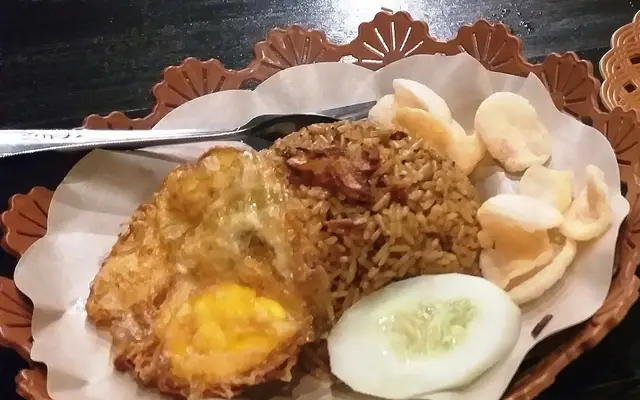
Nasi Goreng Recipe: Home-Style Indonesian Fried Rice for the Family
Smoky, sweet-savoury Indonesian fried rice made with day-old rice, a simple spice paste and kecap manis, with a mild option for kids.
Recipes · Recipe
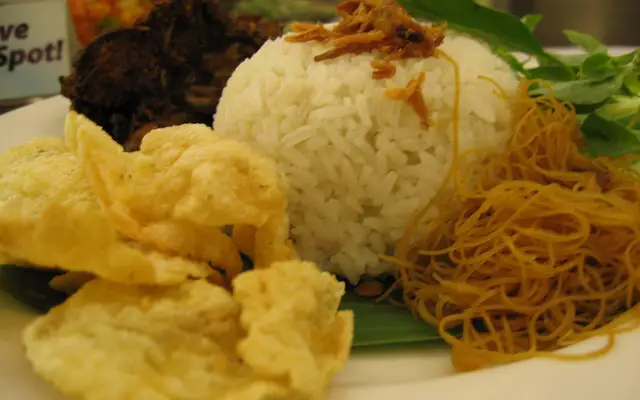
Simple Indonesian Rice Meals: Rice-Cooker Coconut Rice and Easy Bowls
Fragrant rice-cooker coconut rice plus five easy Indonesian-style rice bowl ideas for busy weeknights.
Indonesian Pantry Essentials: What to Stock and How to Substitute
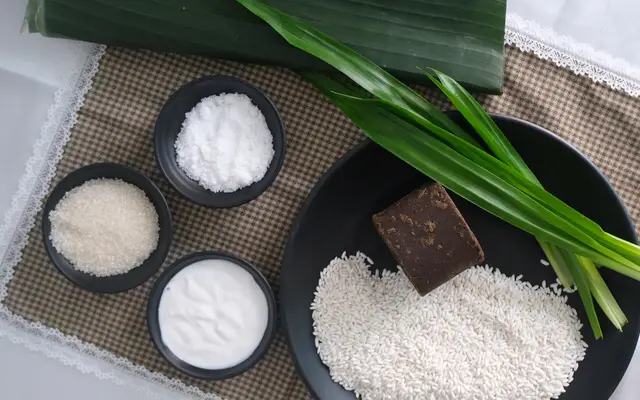
The sauces, aromatics and staples behind Indonesian home cooking, with practical substitutes and storage advice.