
Indonesian Food · Guide
Indonesian Breakfast Guide: Bubur Ayam, Nasi Uduk and Morning Snacks
From rice porridge to coconut rice and market cakes, here is how an Indonesian morning tastes and how to order it.
Breakfast in Indonesia is rarely a light affair of toast and juice. In most cities the morning starts with rice in some form: soft porridge from a pushcart, fragrant coconut rice wrapped in paper, or rice cakes swimming in a coconut-milk vegetable stew. Alongside come trays of small steamed cakes, fried snacks still warm from the wok, and a glass of tea so sweet it doubles as dessert. This guide walks through the dishes you are most likely to meet before ten in the morning, how they differ from place to place, and how to order them with confidence.
Why breakfast is a street-food meal
In Jakarta and other large cities, a big share of breakfasts are bought rather than cooked at home. Vendors set up early near housing estates, office blocks, schools and train stations, and many sell out by mid-morning. That timing matters: if you arrive at noon looking for bubur ayam, the cart may already be gone. Traditional markets are also a reliable breakfast stop, since cake sellers and rice vendors cater to shoppers who arrive at dawn. Our guide to traditional food markets in Indonesia explains how those morning markets work.
Bubur ayam: chicken rice porridge
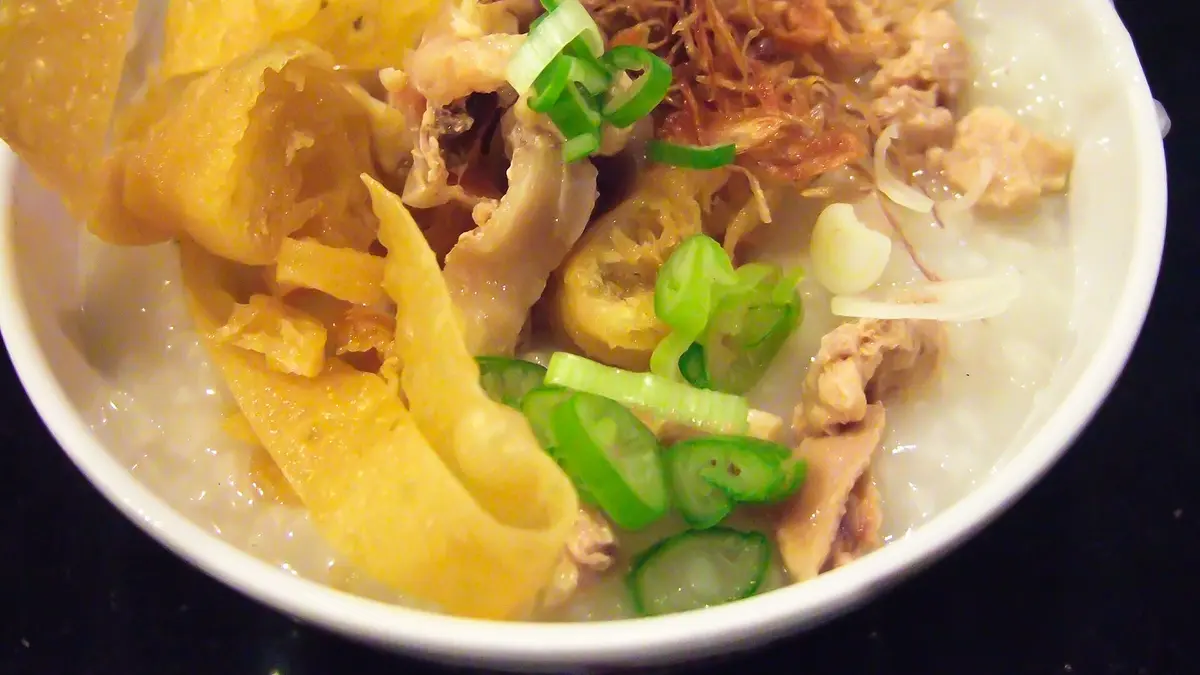
Bubur ayam is rice cooked with plenty of water (often with chicken stock) until it breaks down into a smooth, thick porridge. The porridge itself is usually mildly seasoned; the flavour comes from what is piled on top. Typical toppings include:
- shredded chicken
- cakwe (fried dough sticks, cut into pieces)
- fried shallots and sliced spring onion or celery leaf
- fried soybeans or peanuts
- crackers (kerupuk)
- a drizzle of sweet soy sauce (kecap manis) and salty soy sauce
- sambal served on the side
Many sellers also offer optional skewers as add-ons, such as sate usus (chicken intestine), sate ati ampela (liver and gizzard) and sate telur puyuh (quail eggs). You pay per skewer, so it is easy to customise.
Bandung-style and Jakarta-style bubur
The labels are used loosely, and two carts using the same name can serve quite different bowls, but some broad tendencies are commonly described. Porridge sold as Bandung-style is usually thick and smooth, topped generously with cakwe, crackers and chicken, and seasoned mainly with soy sauce and a little savoury broth. Jakarta-style bowls are often associated with a ladle of kuah kuning, a yellow, turmeric-tinted chicken broth that soaks into the rice, and with a wider spread of skewer add-ons. You will also see Cianjur- and Sukabumi-style bubur advertised around West Java, each with its own small differences in toppings and broth.
To stir or not to stir
Indonesians have a long-running, mostly good-humoured argument about whether bubur should be stirred (diaduk) into a uniform mixture before eating, or eaten in layers so each spoonful keeps its toppings intact. There is no correct answer. Watch the person next to you, then do whatever you prefer.
Chinese-Indonesian porridge
In Chinatown areas such as Glodok you may also find Cantonese-style porridge (often called bubur kanton or bubur Hainan, depending on the seller). Some of these contain pork or use pork stock, so if you avoid pork, ask before ordering.
Nasi uduk: coconut rice from Betawi kitchens
Nasi uduk is rice cooked in coconut milk with aromatics such as lemongrass, salam leaf (Indonesian bay leaf) and sometimes galangal or pandan. It is strongly associated with Betawi (native Jakartan) cooking and is sold from early morning at stalls across the capital. A standard plate comes with a few of the following:
- fried chicken or fried tempeh and tofu
- semur (a sweet soy braise, often of egg or potato)
- omelette strips or a fried egg
- bihun goreng (fried rice vermicelli)
- emping crackers (made from melinjo nuts)
- a peanut-based sambal kacang or a red chilli sambal
The rice is rich but not sweet, which makes it filling and surprisingly good with chilli. If you want to make it at home, our simple Indonesian rice meals include a rice-cooker version.
Nasi kuning: yellow rice for everyday and celebration
Nasi kuning is cooked in a similar way to nasi uduk but coloured gold with turmeric. Yellow is associated with good fortune, so the same rice shaped into a tall cone becomes tumpeng, the centrepiece of thanksgiving gatherings. On an ordinary morning it is sold in small portions with shredded omelette, fried shallots, serundeng (spiced toasted coconut), a piece of chicken or fried potato, and a little sambal. In eastern Indonesia, especially Manado, nasi kuning is often paired with smoked or shredded fish.
Lontong sayur: rice cakes in coconut vegetable stew
Lontong is rice compressed and cooked inside banana leaves until it sets into a firm cake. For lontong sayur, slices of it are served in a coconut-milk stew of young papaya or chayote, long beans and tofu, often with a hard-boiled egg and sambal. Versions vary by region, and lontong Medan tends to be a bigger, more loaded plate.
Kue basah: the market cake tray
Kue basah literally means “wet cakes” and refers to soft steamed or boiled sweets, as opposed to dry biscuits. A morning tray might include:
| Cake | What it is |
|---|---|
| Kue lapis | Steamed layered rice-flour and coconut cake, often in alternating colours |
| Klepon | Pandan glutinous-rice balls filled with liquid palm sugar, rolled in coconut |
| Dadar gulung | Green pandan crepe rolled around sweet coconut |
| Nagasari | Banana wrapped in rice-flour pudding and banana leaf |
| Lemper | Sticky rice filled with spiced shredded chicken, wrapped in banana leaf |
| Kue talam | Two-layer steamed cake, often with a coconut-cream top |
These are bought by the piece and eaten as a snack between meals as much as at breakfast. Our Indonesian desserts guide goes into more of them.
Gorengan: fried snacks
Gorengan are battered and deep-fried snacks sold from glass-fronted carts. Common ones are bakwan (vegetable fritters), tahu isi (stuffed tofu), tempe mendoan (thin, soft-fried tempeh), pisang goreng (fried banana) and ubi goreng (fried sweet potato or cassava). They are usually eaten with a few whole green bird’s-eye chillies bitten alongside, or with a thin sweet-spicy dipping sauce. Gorengan are best eaten fresh; if a batch has been sitting for a while, ask whether a new one is coming. For more of Jakarta’s snack culture, see the Jakarta street food guide.
Kopi and teh manis
The default drink is teh manis, sweet tea, served hot or iced (es teh manis); ask for teh tawar if you want it unsweetened. Coffee often comes as kopi tubruk, ground coffee stirred into hot water and left to settle, so stop before the grounds.
Ordering tips
- Say what you want added or left out: tanpa sambal (without sambal), pedas sedikit (a little spicy), tidak pakai kacang (no peanuts).
- Dibungkus means take away; makan di sini means eat here.
- Pointing at toppings works fine if you do not know the names.
Breakfast with children
Bubur, nasi uduk and lontong are easy to adapt for children: ask for sambal on the side and keep the soy sauce light. For children under four, leave off whole fried peanuts and soybeans, which are a choking hazard, and cut sticky foods such as klepon and lemper into small pieces. Peanuts appear in several sambal and toppings, so check before ordering if anyone in the family has an allergy, and ask a paediatrician if you are unsure about introducing them.
Frequently asked questions
What is the most common Indonesian breakfast?
There is no single answer across the country, but rice-based dishes dominate. In Jakarta, bubur ayam and nasi uduk are among the most widely available morning meals, often alongside gorengan and sweet tea.
Is Indonesian breakfast spicy?
The dishes themselves are usually mild to moderate. The heat mostly comes from sambal and fresh chillies served on the side, so you can control it.
Can vegetarians find breakfast easily?
Yes, with a little care. Lontong sayur, gorengan, kue basah and nasi uduk with tempeh and tofu are good options, but broths and some sambal may contain chicken stock or shrimp paste, so it is worth asking.
Keep reading
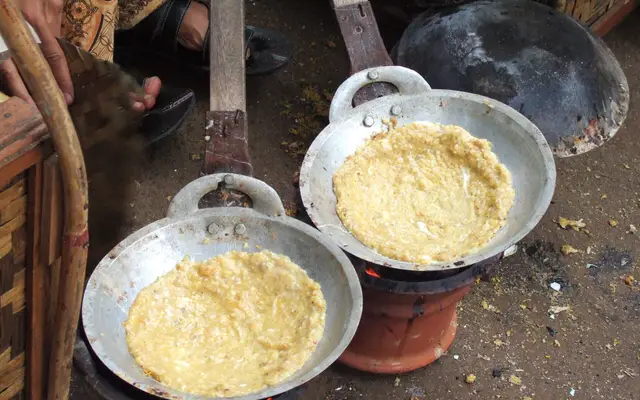
Jakarta Street Food Guide: What to Eat, Where to Look and How to Order
From kerak telor to late-night martabak, the dishes that define Jakarta street food and how to order them with confidence.
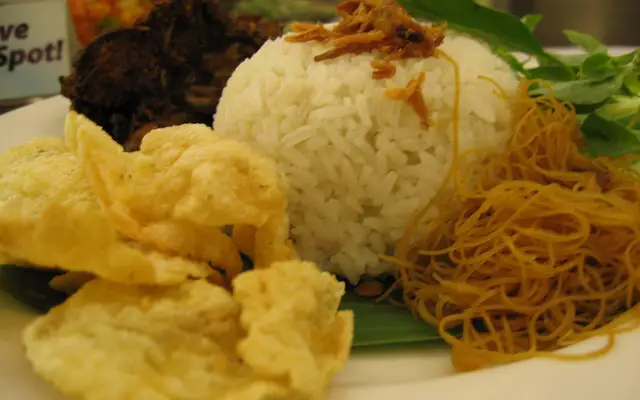
Recipes · Recipe
Simple Indonesian Rice Meals: Rice-Cooker Coconut Rice and Easy Bowls
Fragrant rice-cooker coconut rice plus five easy Indonesian-style rice bowl ideas for busy weeknights.
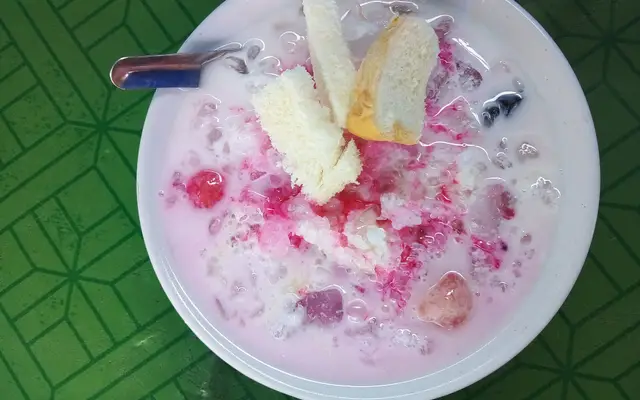
Indonesian Desserts Guide: Es Campur, Klepon, Martabak Manis and More
Coconut, palm sugar and pandan in a dozen forms: the Indonesian sweets worth knowing and how they are eaten.