
Food & Travel · Guide
Hong Kong Dim Sum: A Guide to Old-Style Teahouses, Trolleys and Yum Cha
Trolleys, shared tables and a pot of bo lei: how traditional yum cha works in Hong Kong, what to order and the etiquette worth knowing.
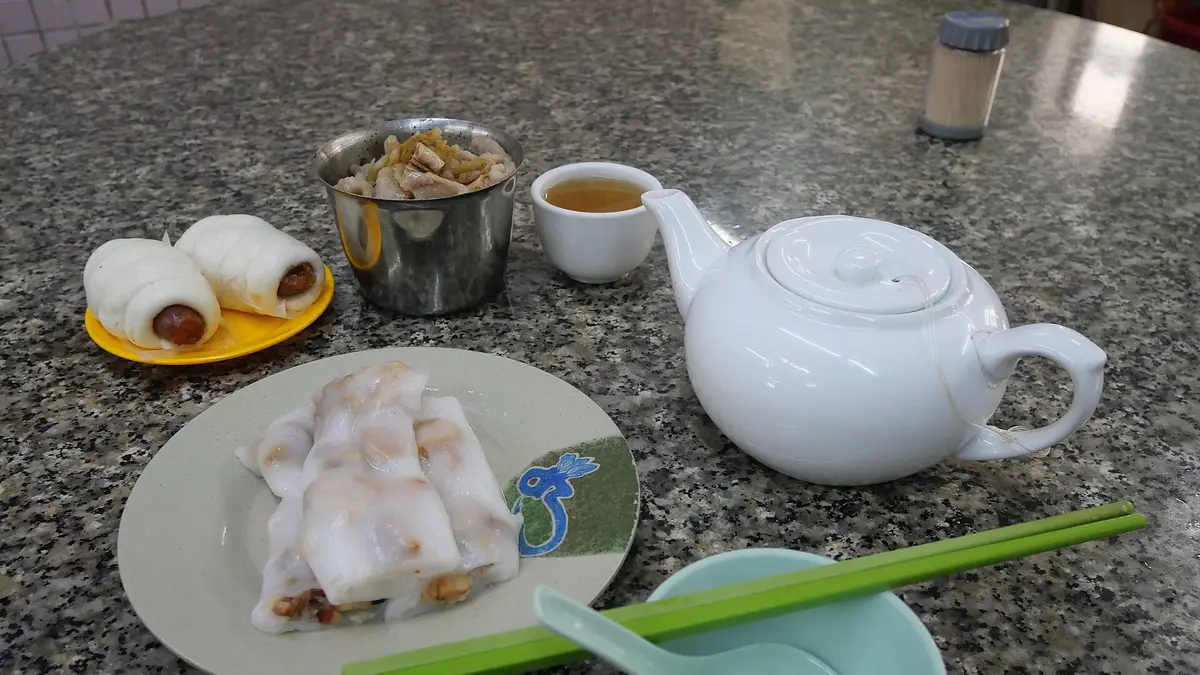
Yum cha, literally drinking tea, is one of Hong Kong’s great everyday rituals: a pot of tea, a table shared with family or strangers, and a stream of small dishes of dim sum arriving in bamboo steamers. Most modern restaurants now take orders on a printed sheet or a tablet, but a handful of old-style teahouses have kept the trolleys, the noise and the habit of sharing tables that defined yum cha for generations. This guide explains how traditional yum cha works, the story of the Lin Heung teahouses as an example of that style, the dishes worth knowing, and the etiquette that makes a first visit easier.
How yum cha works
A yum cha meal usually runs from early morning to mid-afternoon, and its rhythm is simple:
- Get a table. At busy traditional places you may be seated with strangers, a practice known in Cantonese as daap toi. It is normal and nobody expects conversation.
- Choose tea. Staff will ask which tea you want before anything else. Tea is part of the meal, not an extra.
- Order dim sum. Either tick boxes on an order sheet, use a tablet, or, in old-style teahouses, take dishes from trolleys or from staff carrying trays.
- Keep your card. In trolley service, every dish you take is stamped or marked on a card on your table. The bill is calculated from the card at the end.
Dim sum dishes are small, so a group typically orders a wide spread and shares everything.
Common teas
| Tea (Cantonese name) | What it is |
|---|---|
| Bo lei (pu-erh) | Dark, earthy, aged tea; the classic choice, said to cut through richness |
| Heung pin (jasmine) | Light green tea scented with jasmine flowers |
| Tit kwun yum (tieguanyin) | A fragrant oolong |
| Sau mei | A white tea with a gentle, slightly sweet flavour |
| Guk pou | Pu-erh mixed with chrysanthemum flowers, a popular blend |
Old-style teahouses and the Lin Heung story
Before order sheets and tablets, dim sum came to you. Staff pushed trolleys or carried trays between tables calling out what they had, and customers stood up, peered into steamers and grabbed what they wanted. A few Hong Kong teahouses became famous precisely because they kept doing this.
The best-known example is the Lin Heung name. Lin Heung Tea House, in Central, traced its lineage to a celebrated teahouse of the same name in Guangzhou, a name associated in Cantonese baking with lotus seed paste. For decades the Hong Kong teahouse was known for its trolleys, crowded shared tables, old-fashioned dishes and brisk service, and it became a symbol of traditional yum cha. It closed in 2022, which was widely reported as the end of an era, and was later reported to have reopened under new operators. Lin Heung Kui, in Sheung Wan, is a related sister restaurant that has also been known for trolley-style service.
The My Fun Food Diary editorial team has not visited either restaurant for this guide, and we are not reviewing them. Ownership, menus and service style at both have changed over the years, and details may have changed again since this was written. Check current status, location and whether trolley service is still offered on a map app or recent local sources before you go.
Other traditional teahouses in Hong Kong also maintain trolley or tray service, and many large Cantonese restaurants run a trolley at weekends for nostalgia. Asking “Do you still have carts?” is a fair question.
Essential dishes
Steamed
- Har gow. Shrimp dumplings in a translucent wheat starch wrapper, pleated at the top. A test of a kitchen’s skill.
- Siu mai. Open-topped dumplings of pork and shrimp, often topped with crab roe or carrot. Indonesia’s siomay is a descendant; our guide to baso tahu and siomay Bandung shows how it changed along the way.
- Char siu bao. Fluffy steamed buns filled with sweet barbecued pork.
- Pai gwat. Small pieces of pork spare rib steamed with fermented black beans.
- Fung zao. Chicken feet braised then steamed in a savoury, often slightly sweet sauce.
- Lo mai gai. Sticky rice with chicken, mushroom and other fillings wrapped and steamed in a lotus leaf.
Rice rolls and fried items
- Cheung fun. Silky rice noodle rolls filled with shrimp, beef or char siu, served with sweet soy sauce.
- Lo bak go. Pan-fried turnip cake, made with radish and rice flour, often with dried shrimp and preserved sausage.
- Wu gok. Taro puffs with a lacy, crisp shell and savoury filling.
- Spring rolls and fried dumplings.
Sweet
- Dan tat. Egg tarts, with shortcrust or flaky pastry.
- Ma lai go. A tall, spongy steamed cake.
- Lau sa bao. Buns filled with molten salted egg yolk custard; let them cool before biting.
- Lotus seed paste buns and sesame balls.
Etiquette worth knowing
- Pour for others first. Fill the cups of the people around you before your own.
- Finger tapping. When someone pours tea for you, tapping two or three fingers on the table is a quiet thank-you. The custom is often linked to a story about an emperor travelling in disguise, though it is best treated as folklore.
- Lid ajar for more water. Leave the teapot lid tilted open or resting on the handle, and staff will refill it with hot water.
- Rinsing bowls. You may see diners rinse their bowls and chopsticks with tea. It is a habit, not a requirement.
- Sharing is normal. Use serving chopsticks or spoons if they are provided.
- Do not wait for a menu at a trolley place. Stand up, look and ask; staff are used to visitors.
Halal and dietary notes
Much traditional dim sum contains pork or uses lard, and many sauces include rice wine or other alcohol. Even shrimp or vegetable items may be cooked alongside pork. Muslim travellers should treat standard Cantonese dim sum as not halal.
Hong Kong does have halal options. The canteen at the Islamic Centre in Wan Chai is often mentioned as a place serving halal Chinese food including dim sum; the editorial team has not visited it, so check its current status and opening arrangements before going. The Hong Kong Tourism Board also publishes information for Muslim visitors. For a reminder of halal principles from an Indonesian perspective, see our guide to Indonesian food customs and etiquette.
Yum cha with children
Traditional teahouses can be crowded and loud, with hot teapots and moving trolleys, so keep small children seated and away from the aisle. Sticky rice, chewy rice rolls and chicken feet with small bones are not ideal for very young children; for under-fours, cut food small and avoid whole nuts and very sticky items that can be choking hazards. Custard and molten fillings are very hot when they arrive.
Dim sum back home
If you live in Jakarta, Chinese-Indonesian dining in areas such as Kelapa Gading, PIK and Glodok includes plenty of dim sum, much of it adapted to local tastes and some of it halal. Our Jakarta neighbourhood dining guide and the guide to Glodok and Petak Sembilan are good starting points.
Frequently asked questions
What time is yum cha?
Traditionally morning to early afternoon. Many restaurants serve dim sum until mid-afternoon, and some serve it in the evening too.
Do I have to share a table?
At busy traditional teahouses, often yes. It is normal; a nod is enough.
What should a first-timer order?
Har gow, siu mai, char siu bao, cheung fun and egg tarts make a balanced first order, with a pot of bo lei or jasmine tea.
Is trolley service still common?
It is less common than it once was. A few old-style teahouses keep it, and some larger restaurants bring it back at weekends, so check before you go.
Keep reading
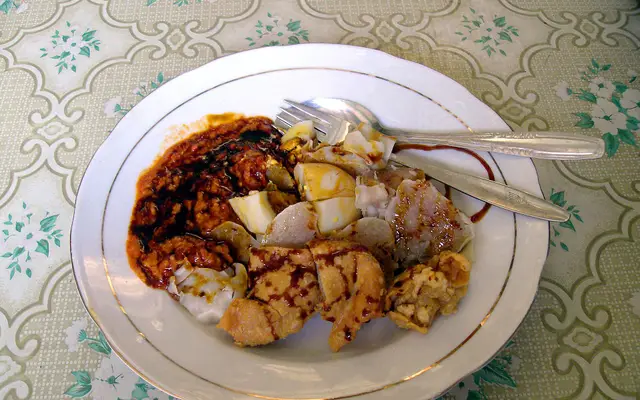
Baso Tahu and Siomay Bandung: What They Are and How to Order Them
Steamed fish-stuffed tofu, dumplings and peanut sauce: a clear guide to Bandung's baso tahu and siomay, and how to order them.
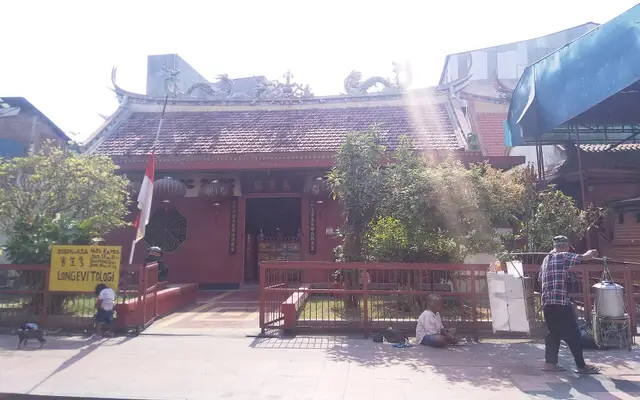
Glodok and Petak Sembilan: A Food Guide to Jakarta's Chinatown
What to eat around Petak Sembilan and Gang Gloria in Glodok, Jakarta's Chinatown, with notes on temples, festivals and pork.
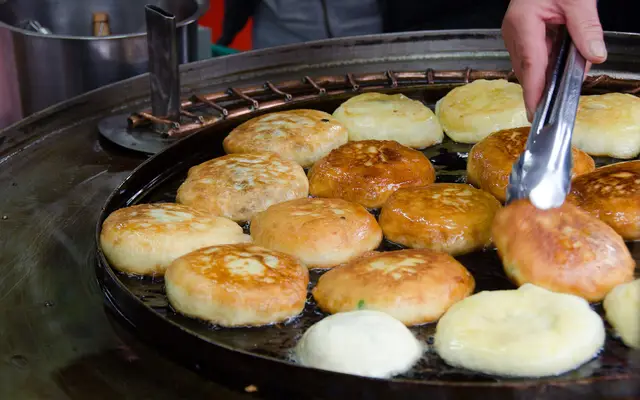
BIFF Square Street Food in Busan: What to Eat and How to Plan a Visit
Seed-stuffed hotteok, fish cake skewers and tteokbokki: what to eat around Busan's BIFF Square and the markets next door.