
Food & Travel · Guide
Indonesian Food Customs and Table Etiquette: What Visitors Should Know
Right hands, shared plates, tumpeng, buka puasa and tipping: the everyday food customs that make eating in Indonesia easier.
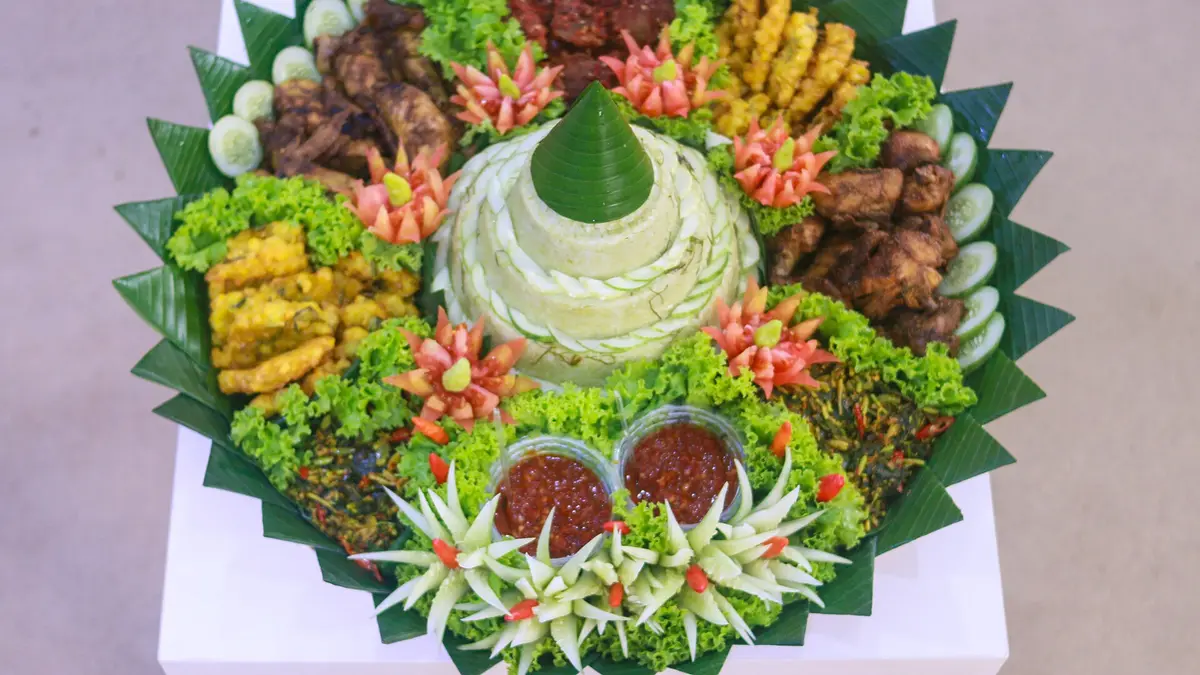
Indonesians are famously relaxed hosts, and very few visitors cause real offence at the table. Still, knowing a handful of customs makes meals smoother and shows respect at a roadside warung, in a colleague’s home or at a family celebration. Indonesia is enormous and diverse, with hundreds of ethnic groups and several major religions, so practices vary from region to region. The points below are widely shared across the country, especially in Java and Sumatra, and they will serve you well almost anywhere.
Hands, spoons and forks
The right hand rule
Use your right hand to eat, to pass food and to hand over money. The left hand is traditionally associated with personal hygiene, so offering or taking something with it can look careless. Left-handed visitors need not worry about every movement; just make the effort when passing dishes or paying.
Spoon and fork, not knife
The standard everyday setting is a spoon in the right hand and a fork in the left. The fork pushes food onto the spoon, and the spoon does the work, including cutting soft meat or tofu. Knives rarely appear on the table, because food is cut into pieces before cooking. Chopsticks are normal for noodles and in Chinese-Indonesian or Japanese restaurants.
Eating with your hand
In many settings, particularly at Padang restaurants, Sundanese eateries and seafood places, people eat rice with the fingers of their right hand. You will often be given a kobokan, a small bowl of water, sometimes with a slice of lime, for rinsing your fingers. It is for washing, not drinking. Gather a little rice and side dish with your fingertips and use your thumb to push it into your mouth. Nobody expects visitors to do this, and a spoon is always available if you ask.
Sharing and serving
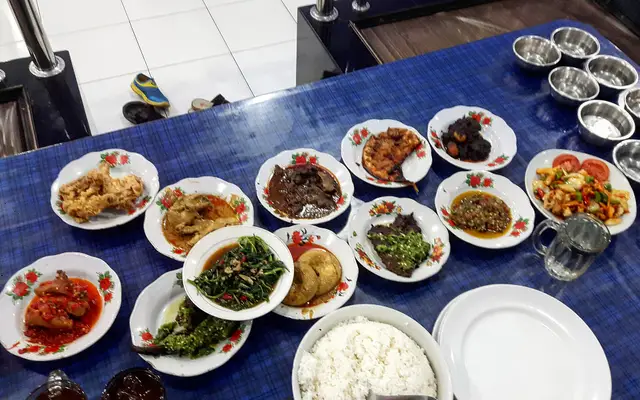
Indonesian meals are built around rice with several shared dishes. Each person takes a portion of rice on their own plate, then adds small amounts of the side dishes, going back for more as the meal continues rather than piling everything on at once. At a Padang restaurant served hidang style, a whole spread of dishes arrives at the table and you pay only for what you touch; our guide to Minang cuisine explains how that works.
Other useful habits:
- When invited to eat, wait for the host to say “silakan” (please, go ahead) before starting.
- In more traditional households, elders are served first or invited to take food first.
- It is polite to accept at least a little of what you are offered. If you are full, “sudah kenyang, terima kasih” (I’m already full, thank you) is a graceful refusal.
- Sambal is served on the side so each person can control the heat. If you want food without chilli, ask for “tidak pedas” (not spicy).
- Covering your mouth with your hand while using a toothpick is considered good manners.
- To call staff, a raised hand and “Mas” (to a young man) or “Mbak” (to a young woman) is normal; “Pak” and “Bu” are used for older men and women.
Celebration foods
Tumpeng
A tumpeng is a cone of rice, often yellow rice coloured with turmeric, surrounded by side dishes such as fried chicken, boiled egg, tempeh, urap (vegetables with spiced coconut) and perkedel. It appears at birthdays, office openings, Independence Day gatherings and thanksgiving events. The cone is commonly linked to the image of a mountain and to gratitude. Traditionally the tip is cut and offered to the most senior or honoured person present, which makes for a small ceremony worth watching.
Slametan and kenduri
A slametan (or selamatan) is a Javanese communal meal held to mark a life event, a new house, a journey or a remembrance, with prayers followed by shared food. Similar gatherings in other regions are called kenduri. Guests often take a packet of food home, known as berkat. If you are invited, dress modestly, accept the food you are given, and follow what others do.
Ramadan and Lebaran
Most Indonesians are Muslim, and the fasting month of Ramadan reshapes the daily rhythm of eating. Dates shift about eleven days earlier each year on the Western calendar, so check before you travel.
During Ramadan
Fasting runs from before dawn until sunset. Before dawn, families eat sahur; at sunset comes buka puasa, the breaking of the fast, usually started with something sweet and a drink. Street sellers set up in the afternoon to sell takjil, the snacks and drinks for that moment: kolak (bananas and sweet potato in coconut milk and palm sugar), es buah, dates and gorengan. Restaurants are packed at sunset, so book or arrive early.
Non-Muslim visitors are not expected to fast. In big cities, many restaurants and malls stay open during the day, sometimes with curtains drawn. In more conservative areas, eating, drinking and smoking discreetly rather than in the street is a considerate choice. In Aceh, local regulations are stricter, so follow local guidance there.
Lebaran
Idul Fitri, known as Lebaran, ends Ramadan and is the biggest holiday of the year. Classic dishes include ketupat (rice cooked in woven palm-leaf pouches), opor ayam (chicken in mild coconut sauce), rendang, sambal goreng ati and jars of cookies such as nastar (pineapple tarts) and kastengel (cheese sticks). Many people return to their home towns before the holiday, which means heavy traffic, full trains and closed small eateries in big cities for several days. Families hold open houses where visitors are welcome to eat; if invited, bring a small gift such as a cake or cookies.
Other festivals and faiths
Chinese New Year brings kue keranjang (sticky rice cake) and lapis legit to many tables, and Chinese-Indonesian food can include pork. In Bali, canang sari offerings of flowers and food are placed on pavements and in doorways; step around them. On Nyepi, the Balinese day of silence, almost everything on the island shuts, including restaurants, and hotels look after their guests. Christmas is widely celebrated in North Sulawesi, East Nusa Tenggara, Papua and parts of North Sumatra, often with festive pork dishes.
Halal basics
Most food sold in Indonesia is halal, but not all. Pork appears in Chinese-Indonesian, Balinese, Manadonese and Batak cooking, and alcohol is used in some dishes and sold in many restaurants. Indonesia has an official halal certification label; a hand-written “no pork no lard” sign is a description, not a certificate. If halal matters to you, look for the official label or ask “Ini halal?” Muslim travellers will find prayer rooms (musala) in malls, petrol stations and many restaurants.
Paying and tipping
Tipping is not obligatory in Indonesia. Many sit-down restaurants add a service charge and local tax to the bill, so check before adding more. At warung and street stalls, people simply pay the stated amount. Rounding up for a helpful driver, a hotel porter or a parking attendant with small notes is appreciated. In a group, it is common for one person, often the host or the most senior, to pay for everyone; offering to split is fine, but do not insist too hard if someone has clearly chosen to treat you.
For a broader view of how these customs fit into a trip, see our food travel planning guide, and for buying ingredients the local way, our traditional markets guide.
Frequently asked questions
Is it rude to eat with my left hand in Indonesia?
It is not a disaster, but using your right hand to eat, pass food and pay is the polite norm. If you are left-handed, focus on passing and paying with the right.
Should I finish everything on my plate?
Taking modest portions and finishing them is appreciated, as wasting rice is frowned upon in many families. Take a little at a time from shared dishes rather than overloading your plate.
Can I eat in public during Ramadan if I am not fasting?
In major cities, yes, and many restaurants remain open. Being discreet, especially in conservative areas, is considerate. Aceh has stricter local rules.
Do I need to tip in Indonesian restaurants?
No. Check whether a service charge has already been added. Rounding up or leaving small change is a kind gesture, not an obligation.
Keep reading

Traditional Food Markets in Indonesia: A Practical Guide to the Pasar
How a pasar is laid out, what to buy, how to bargain kindly and stay healthy, plus night markets and floating markets.
Gulai and Minang Cuisine: Rendang, Kalio and How to Order Nasi Padang
Gulai, kalio and rendang explained, plus a practical guide to ordering at a Padang restaurant without confusion.
Planning a Food Trip in Indonesia: Routes, Seasons and Stomach Safety
Three eating routes, when to go, how to get around and how to keep your stomach on side for a food-focused trip in Indonesia.