
Indonesian Food · Guide
Gulai and Minang Cuisine: Rendang, Kalio and How to Order Nasi Padang
Gulai, kalio and rendang explained, plus a practical guide to ordering at a Padang restaurant without confusion.
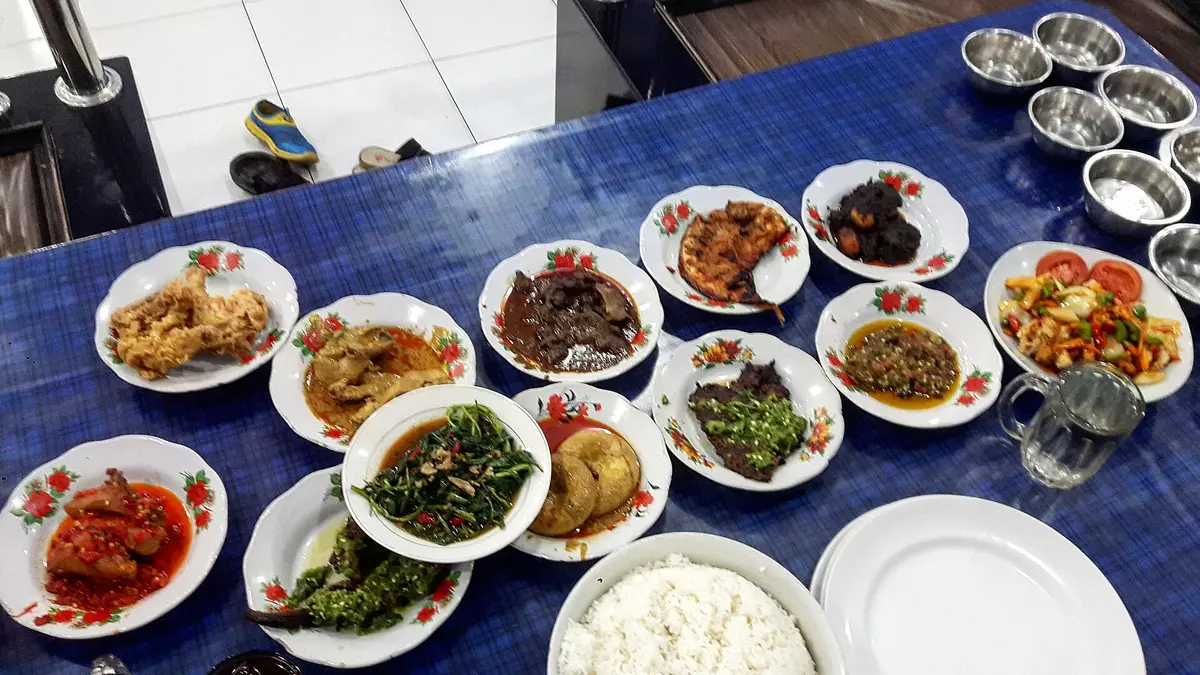
Few regional cuisines have travelled as far within Indonesia as Minangkabau cooking from West Sumatra. Its restaurants, known everywhere as rumah makan Padang, are found in small towns and big cities, at toll-road rest stops and in mall food courts, and increasingly abroad. Much of that spread is credited to merantau, the Minang tradition of young people leaving home to work and trade in other places, often opening eateries along the way. At the heart of the cuisine is gulai, a family of golden, coconut-milk dishes, together with its long-cooked relatives kalio and rendang. This guide explains what those dishes are, what else to look for on the counter, and how ordering works.
What is gulai?
Gulai is a dish of meat, fish, offal or vegetables simmered in coconut milk with a ground spice paste. The paste typically includes shallots, garlic, chilli, ginger, galangal, turmeric and candlenut, with aromatics such as lemongrass, turmeric leaf, lime leaves and asam kandis (a dried sour fruit used in Sumatran cooking). Some versions add warm spices such as coriander, cumin, cardamom or star anise, a sign of the region’s long history of trade with India and the Middle East.
The result is a sauce that is rich and fairly loose, golden yellow from turmeric, and ladled generously over rice. Gulai is often compared to curry, and the comparison is fair as long as you remember it has its own distinct balance of herbs and sourness.
Common types of gulai
- Gulai ayam: chicken, the everyday version.
- Gulai kepala ikan: fish head, usually from a large fish such as snapper, prized for the cheeks and gelatinous parts.
- Gulai tunjang: beef tendon or foot, soft and sticky after long cooking.
- Gulai otak: beef brain, with a very soft, custard-like texture.
- Gulai babat and gulai usus: tripe and intestine.
- Gulai cubadak (nangka): young jackfruit, a popular vegetable gulai.
- Gulai daun singkong: cassava leaves in coconut milk, often served free alongside the main dishes.
- Gulai telur: hard-boiled eggs in gulai sauce.
Gulai, kalio and rendang: one dish at three stages
The easiest way to understand these three dishes is as points on a timeline. They share similar ingredients, and the difference is mostly how long they cook and how much liquid remains.
| Dish | Cooking | Texture | Colour |
|---|---|---|---|
| Gulai | Simmered until the meat is tender | Plenty of sauce | Golden yellow |
| Kalio | Cooked longer, sauce reduced and thickened | Thick, oily sauce clinging to meat | Light to mid brown |
| Rendang | Cooked for hours, stirred until almost dry | Dark, dry, caramelised paste | Deep brown |
As the coconut milk reduces, its oil separates and begins to fry the spice paste and meat. That is where rendang gets its dark colour and concentrated flavour. Because it is so dry, traditional rendang keeps well, which is often given as one reason it suited travel and ceremonial feasts. Many restaurants outside West Sumatra serve something closer to kalio while calling it rendang, so if you see a moist, brown beef dish labelled rendang, that is normal rather than wrong.
Rendang is most often made with beef, but there are also versions with chicken, duck, egg, jackfruit, and even regional specialities like rendang paru (beef lung).
Other dishes on the counter
A Padang restaurant window usually shows stacked plates of ready-cooked dishes. Beyond the gulai and rendang, look for:
- Ayam pop: pale, steamed-then-fried chicken, mild and tender, served with a red chilli sauce.
- Ayam bakar and ayam goreng: grilled or fried chicken, often with a spiced coating.
- Dendeng balado: thin, crisp sheets of beef topped with chilli and shallot.
- Ikan bakar: grilled fish brushed with spice paste.
- Telur dadar Padang: a very thick, crisp-edged omelette with spring onion and chilli.
- Perkedel: potato fritters.
- Sambal ijo and sambal merah: green and red chilli relishes. Our sambal guide explains the difference.
- Sate Padang: beef or offal skewers in thick spiced gravy, usually sold separately from the main restaurants. See our sate guide.
How to order nasi Padang
There are two main ways a Padang restaurant serves food, and knowing which one you are in saves confusion.
Hidang: everything comes to the table
In hidang service, a server arrives carrying a stack of small plates balanced along one arm and sets a selection of dishes on your table, along with rice. You eat what you want and leave the rest. At the end, the staff count what has been taken and you pay only for what you ate. A few points of etiquette:
- Touching or taking from a plate generally means you will be charged for it, so if you only want a little sauce, ask first or use the kuah (sauce) served with your rice.
- Pieces are often counted by portion, so taking one piece of chicken from a plate of several typically means you pay for one portion.
- If you are not sure about prices, ask before you start. Prices are not usually displayed on the table.
Rames: choose at the counter
In rames (or pesan) service, you go to the counter and point at what you want. The server puts rice on a plate, adds your chosen dishes, and ladles over a mix of sauces. This is the norm at smaller restaurants and food courts and is better for solo diners or anyone who wants to control their order and budget.
Useful phrases
- Nasi rames, pakai rendang dan sayur: rice with rendang and vegetables.
- Kuahnya campur: mixed sauces poured over the rice.
- Kuahnya sedikit: just a little sauce.
- Dibungkus: to take away. Takeaway nasi Padang is wrapped in paper and banana leaf, and is widely joked about as being more generous than the dine-in portion.
Eating by hand
Many Minang diners eat with their right hand, and restaurants usually provide a small bowl of water (kobokan) for rinsing fingers, along with cutlery for anyone who prefers it. The water is for washing, not drinking. Our guide to Indonesian food customs and etiquette covers eating by hand in more detail.
Halal and the Minang table
Minangkabau culture is closely tied to Islam, and Padang restaurants are generally understood to serve halal food. That reputation is part of why they are a dependable choice for travellers across the country.
Fusion takes on Minang flavours
Rendang in particular has become a favourite flavour for modern cooks. Around Indonesian cities you may come across rendang burgers, rendang pizza, rendang-filled croissants and pastries, rendang fried rice and rendang spring rolls. Sambal ijo is turning up on pasta and grain bowls, and gulai sauce is being used with noodles. Some purists find these versions odd, while others see them as a natural continuation of a cuisine that has always adapted to new places. At home, a batch of rendang paste is a useful start for experiments; our bumbu basics guide explains how to make and fry spice pastes properly.
For more regional cooking from across the archipelago, see regional Indonesian dishes to try.
Frequently asked questions
Is gulai the same as curry?
Gulai is often described as an Indonesian curry. It shares coconut milk and ground spices with many South and Southeast Asian curries, but its herbs, sour notes and cooking style are distinctly Sumatran.
Is Padang food very spicy?
Many dishes carry real heat, especially dendeng balado and the sambal. Gulai, ayam pop and perkedel are milder choices, and you can ask for less sauce or sambal on the side.
Why does rendang look different in different restaurants?
Because rendang exists on a scale from moist kalio-like versions to fully dry, dark rendang. How long the cook reduces it, and local taste, decide where a particular restaurant lands.
Keep reading
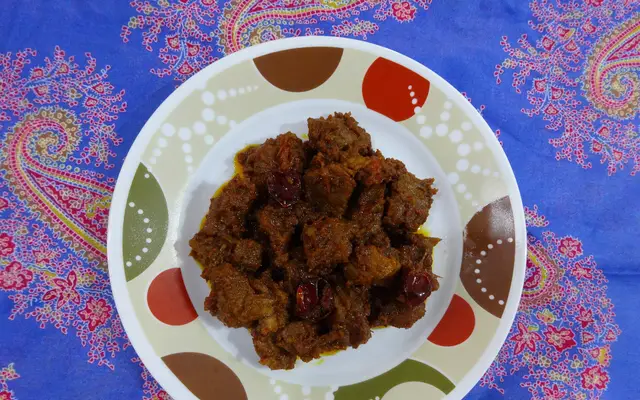
Regional Indonesian Dishes to Try, From Aceh to Manado
Indonesia is many cuisines in one. Here are the regional dishes worth seeking out, and what makes each region taste different.
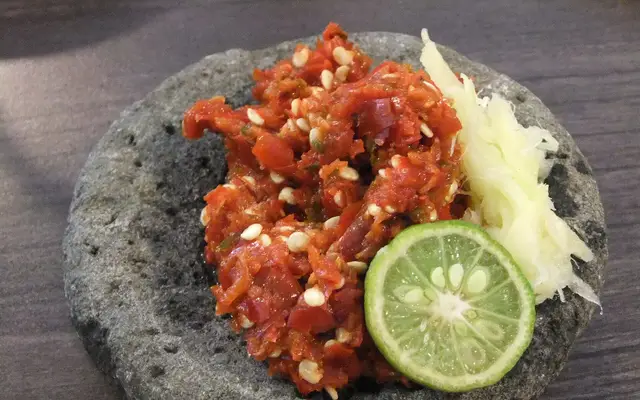
Sambal Guide: Indonesia's Chilli Sauces, From Terasi to Matah
Raw or cooked, sweet or sour, mild or fierce: a practical guide to the chilli sauces on every Indonesian table.
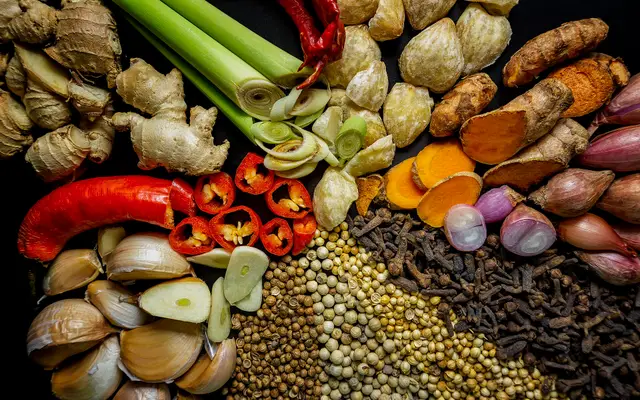
Bumbu Basics: How to Make Indonesian Spice Pastes at Home
The three base spice pastes behind countless Indonesian dishes, and how to grind, fry and freeze them.