
Indonesian Food · Guide
Sate Guide: Indonesian Satay Styles, Sauces and How to Order
Peanut sauce is only the start. Meet the regional styles of Indonesian sate and learn how to order them like a local.
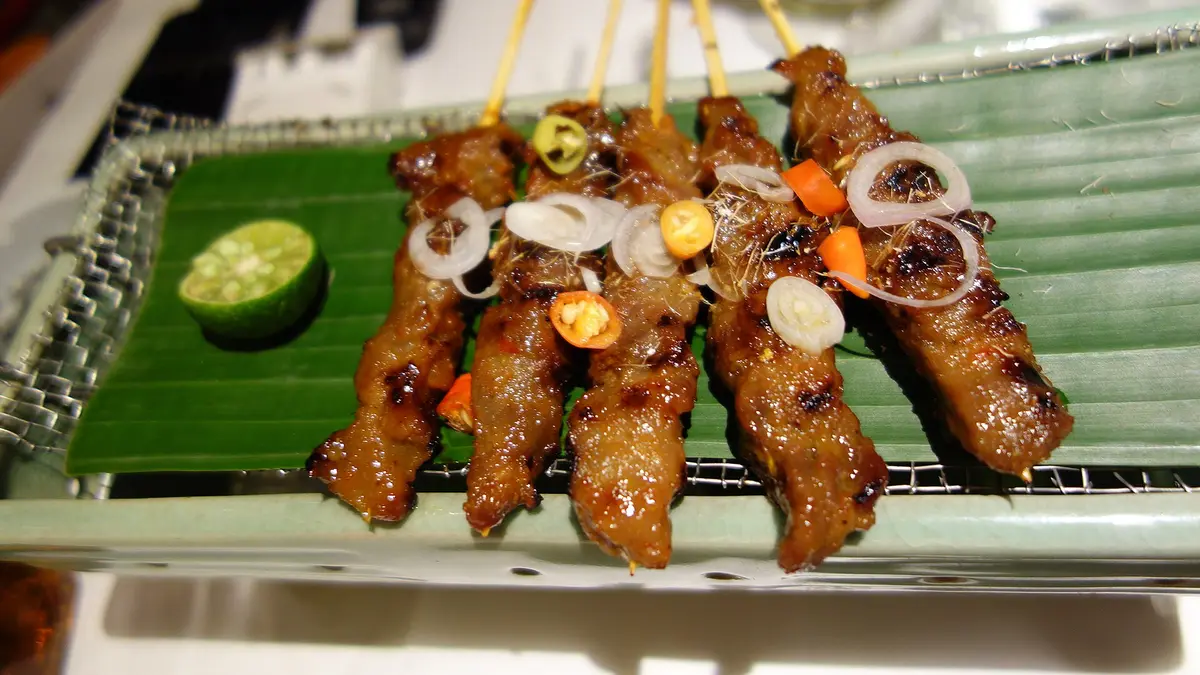
Sate is skewered meat grilled over charcoal, and in Indonesia it is less a single dish than a whole category of them. The smoke from a sate cart fanning its coals is one of the most familiar evening sights in any town. Around the world, satay is often reduced to chicken with peanut sauce, but in Indonesia the meat, the marinade, the skewer and the sauce all change from region to region. Some styles are sweet and sticky with soy, some are drowned in a thick spiced gravy, and some are seasoned with little more than salt. This guide introduces the main regional styles, the sauces that go with them, and how to order.
What makes sate, sate
The basic method is simple: small pieces of meat, offal or seafood are threaded onto skewers, usually of bamboo, and grilled quickly over hot charcoal. The vendor fans the coals constantly so the fat drips and flares, which gives sate its smoky, slightly charred edges. Before or during grilling, the meat is often brushed with a marinade of kecap manis, oil and spices. The skewers are then served with a sauce and something starchy, typically lontong or ketupat (compressed rice cakes) or plain rice.
Common meats include chicken (sate ayam), goat or mutton (sate kambing), beef (sate sapi), and offal such as liver, heart and intestine. Seafood versions use shrimp, squid or clams. Rabbit (sate kelinci) is sold in some highland tourist areas. Pork satay exists in Bali, in parts of North Sulawesi and in Chinese-Indonesian cooking, but most sate in Java and Sumatra is halal.
Regional styles
Sate Madura
The style most people picture. Originating with cooks from the island of Madura, off East Java, it is now sold by Madurese vendors all over the country. Small pieces of chicken or goat are marinated in kecap manis, grilled, and served with a peanut sauce loosened with sweet soy, plus sliced shallots, chilli and lime. Goat versions are often served with kecap and chilli rather than peanut sauce.
Sate Padang
From West Sumatra, sate Padang uses beef, tongue or offal that is boiled in spiced broth before grilling. The defining feature is the sauce: a thick, glossy gravy made from the spiced broth, thickened with rice flour and coloured with turmeric and chilli. There are two main styles. Sate Padang Panjang is known for a yellow sauce, while sate Pariaman has a redder, spicier one. It is served with ketupat and topped with crispy fried shallots.
Sate Ponorogo
From Ponorogo in East Java, this sate is made from chicken cut into larger, flatter pieces rather than small cubes, so each skewer often holds a single strip of meat. The chicken is marinated in a sweet spice mix before grilling, and served with a peanut sauce and sambal.
Sate lilit
A Balinese style in which minced fish, chicken or pork is mixed with grated coconut, spice paste and lime leaves, then pressed around flat bamboo sticks or lemongrass stalks. “Lilit” means to wrap. The lemongrass perfumes the meat as it grills, and sate lilit is usually eaten as part of a mixed rice plate with sambal matah rather than with a dipping sauce. Our guide to Balinese mixed rice shows how it fits into a meal.
Sate maranggi
Associated with Purwakarta and the surrounding area in West Java, sate maranggi uses beef or lamb marinated in a sweet, spiced mixture before grilling, so it needs no peanut sauce. It is commonly served with a fresh sambal of chopped tomato and chilli, sometimes with sweet soy, and eaten with rice or ketan (sticky rice).
Sate klathak
From the Bantul area south of Yogyakarta, sate klathak is goat meat seasoned simply with salt and grilled on iron skewers, often said to be made from bicycle spokes. The metal conducts heat through the meat so it cooks from the inside as well. It is served with a bowl of gulai broth for dipping or pouring over rice. Our page on eating in Yogyakarta covers sate klathak alongside gudeg and other local dishes.
Sate buntel
A Solo speciality. Minced goat or lamb is wrapped in a thin layer of caul fat (“buntel” means wrapped), shaped into a fat sausage on a skewer, and grilled. It is served with sweet soy sauce, sliced shallots, chilli and cabbage.
Newer styles
- Sate taichan: a Jakarta favourite from the last decade or so, made from chicken grilled with salt and lime, without the usual sweet marinade, and served with a very hot sambal.
- Sate usus and sate telur puyuh: skewers of chicken intestine or quail eggs, often sold as add-ons at bubur and nasi uduk stalls.
- Sate kere: a Solo street food originally made from tempeh gembus (tempeh from soybean pulp) and offal, an example of sate made from inexpensive ingredients.
The sauces
| Sauce | Base | Usually served with |
|---|---|---|
| Bumbu kacang | Ground roasted peanuts, garlic, chilli, kecap manis | Sate Madura, sate ayam, sate Ponorogo |
| Sambal kecap | Kecap manis, shallot, chilli, lime | Sate kambing, sate buntel, sate maranggi |
| Kuah Padang | Spiced broth thickened with rice flour | Sate Padang |
| Gulai broth | Coconut-milk curry broth | Sate klathak |
| Sambal matah or fresh sambal | Raw shallot, chilli, lemongrass, tomato | Sate lilit, sate maranggi, sate taichan |
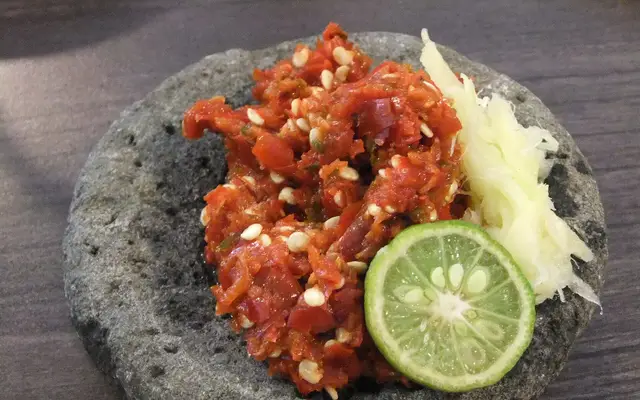
Our sambal guide explains the main sambal in more detail.
How sate is sold in Jakarta
In Jakarta, sate is mostly an evening food. Look for:
- Pushcarts (gerobak) that roam residential streets or park on the same corner each night, grilling to order.
- Tented roadside stalls (tenda) that set up after dark with plastic stools and a big grill out front.
- Sit-down restaurants specialising in one style, especially goat sate, sate Padang or sate Madura.
- Food courts and malls, where sate stalls sit beside other Indonesian vendors.
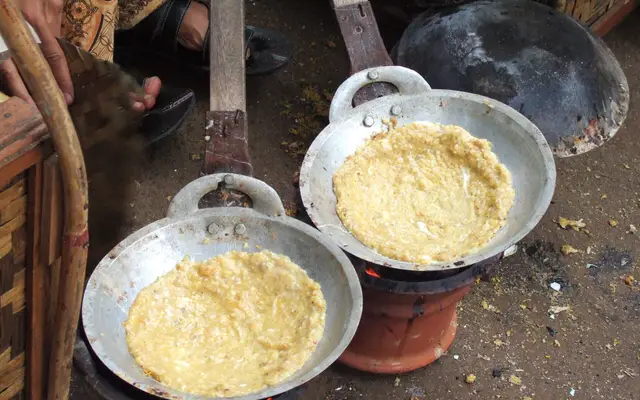
You can find more evening food options in the Jakarta street food guide.
Ordering tips
- Sate is ordered by the number of skewers (tusuk). Sepuluh tusuk means ten skewers.
- Say whether you want lontong or rice (pakai lontong or pakai nasi).
- For goat, you can ask for meat only (daging saja) if you prefer to avoid fatty pieces.
- Ask for sauce on the side (bumbunya dipisah) if you want to control how much goes on.
- For less heat, say tidak pedas. Many vendors add chilli directly to the plate.
Sate and children
Sate is a reliable crowd-pleaser with children, but take a few precautions. Remove meat from the skewers before giving it to young children, as the sharp points can cause injuries, and cut it into small pieces for children under four. Make sure meat is cooked through, especially chicken and minced sate. Peanut sauce is the most common accompaniment, so check carefully if anyone has a peanut allergy and choose kecap-based sauces instead. Ask a paediatrician about introducing peanuts if you are unsure.
Frequently asked questions
What is the difference between sate and satay?
They are the same thing. Sate is the Indonesian spelling; satay is the common English spelling used in Malaysia, Singapore and elsewhere.
Is sate always served with peanut sauce?
No. Peanut sauce is typical of Javanese and Madurese styles, but sate Padang uses a spiced gravy, sate klathak comes with gulai, and many goat and beef sate are served with sweet soy and chilli.
Is Indonesian sate halal?
Most chicken, goat and beef sate in Java and Sumatra is halal. Pork sate is common in Bali, parts of North Sulawesi and some Chinese-Indonesian restaurants, so check if this matters to you.
Keep reading
Sambal Guide: Indonesia's Chilli Sauces, From Terasi to Matah
Raw or cooked, sweet or sour, mild or fierce: a practical guide to the chilli sauces on every Indonesian table.
Jakarta Street Food Guide: What to Eat, Where to Look and How to Order
From kerak telor to late-night martabak, the dishes that define Jakarta street food and how to order them with confidence.
Regional Indonesian Dishes to Try, From Aceh to Manado
Indonesia is many cuisines in one. Here are the regional dishes worth seeking out, and what makes each region taste different.