
Food & Travel · Guide
Nasi Ayam Kedewatan: A Guide to Balinese Mixed Chicken Rice Near Ubud
Shredded spiced chicken, sate lilit, lawar and sambal matah on one plate: how Balinese nasi ayam works and what to know before you order near Ubud.
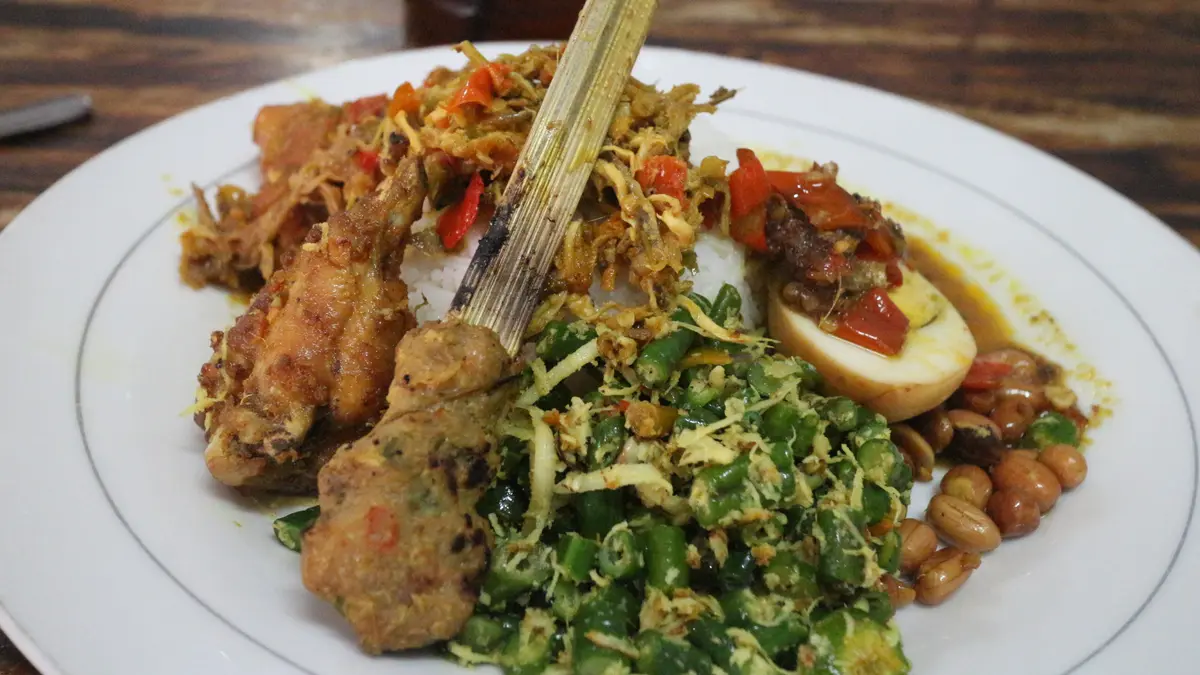
Ask people who know Ubud where to eat a proper Balinese lunch and the words nasi ayam often come up, sometimes with the name of the village of Kedewatan attached. Nasi ayam, literally chicken rice, is Bali’s answer to the mixed rice plates found across Indonesia: a mound of white rice surrounded by small portions of chicken cooked several ways, vegetables, peanuts and a sharp, fresh sambal. This guide explains what is usually on the plate, why Kedewatan is linked with the dish, how it fits into Balinese food more widely, and what halal-conscious travellers should know.
What is on a plate of nasi ayam
Nasi ayam in Bali is built around the island’s signature spice paste, base genep. It is a dense mix of shallots, garlic, chillies, galangal, turmeric, ginger, kencur (aromatic ginger), candlenuts, shrimp paste, coriander seed and more, and it gives Balinese chicken its deep yellow colour and layered flavour. If you want to understand spice pastes like this, our bumbu basics guide is a good starting point.
A typical plate brings together several of the following, in small amounts:
| Component | What it is |
|---|---|
| Ayam suwir | Shredded chicken cooked in base genep, often moist and fairly spicy |
| Ayam betutu-style chicken | Chicken slow-cooked in heavy spice; sometimes served in pieces |
| Sate lilit | Minced chicken mixed with spice paste and coconut, wrapped around a lemongrass stalk or bamboo stick and grilled |
| Lawar | Finely chopped vegetables (often long beans or young jackfruit) mixed with grated coconut, spices and, at chicken specialists, chicken |
| Kulit ayam | Crisp fried chicken skin |
| Kacang goreng | Fried peanuts, sometimes with crisp-fried shallots |
| Telur | Boiled or spiced egg, at some places |
| Kuah or sup | A small bowl of clear chicken broth to moisten the rice |
| Sambal matah | Raw shallot, lemongrass, chilli, lime leaf and oil, chopped fresh |
The balance is the point: rich spiced chicken, crisp skin and peanuts, cooling vegetables and broth, and the sharp lift of sambal matah. Each mouthful can be different depending on what you mix.
Why Kedewatan
Kedewatan is a village just outside central Ubud in Gianyar, on the road heading north-west. Over the years it became closely associated with nasi ayam because of a long-established eatery there, Nasi Ayam Kedewatan Ibu Mangku, which is widely known for serving this style of plate. Its fame helped make “nasi ayam Kedewatan” shorthand for the dish, and other warung in and around the area serve similar plates.
The My Fun Food Diary editorial team has not visited Ibu Mangku for this guide, and this is not a review. If you plan to go, check its current location, opening status and any branches on a map app before travelling, since well-known warung sometimes open additional outlets or change their arrangements.
How nasi ayam fits into Balinese food
Nasi ayam is one branch of a larger tradition of Balinese mixed rice, broadly called nasi campur Bali. Other plates you may meet include:
- Nasi campur with babi guling. Spit-roasted pork with crackling, lawar and sausage. This is one of Bali’s most famous dishes and is not halal.
- Nasi jinggo. Small banana-leaf parcels of rice with a few bites of sambal and protein, sold cheaply in the evening, especially around Denpasar.
- Nasi tepeng and bubur. Rice porridges eaten in the morning in parts of the island.
- Ayam or bebek betutu. Whole chicken or duck rubbed with spice paste and slow-cooked until very tender.
For a wider look at how Balinese cooking compares with Javanese, Padang and other regional styles, see regional Indonesian dishes to try. Sate lilit in particular is covered in our guide to Indonesian sate.
About sambal matah
Sambal matah deserves its own mention. Unlike cooked or pounded sambals, it is a raw relish: thinly sliced shallots, bird’s eye chillies, lemongrass, lime leaves and sometimes torch ginger, dressed with warm coconut oil, salt and lime. It is bright and aromatic rather than heavy. Our sambal guide explains how it differs from sambal terasi, dabu-dabu and others.
Halal awareness in Bali
Bali is the one province in Indonesia where most people are Hindu, and pork is part of everyday Balinese cooking. For Muslim travellers or anyone who avoids pork:
- Chicken specialists are a good fit, but check. A warung that sells only nasi ayam is a natural choice, but most are not halal-certified, and lawar in some kitchens can contain pork or blood. Ask politely: “Ada babi?” (Is there pork?) or “Ini halal?”
- Look for signage. Some warung display halal certification or signs such as “warung Muslim”.
- Javanese and Padang food is widely available. Warung run by families from Java, Lombok or West Sumatra are common across Bali and are a reliable option if you are unsure.
- Alcohol. Arak is a Balinese spirit and is also sometimes used in cooking. It is not normally part of a nasi ayam plate, but it is worth knowing.
Our guide to Indonesian food customs and etiquette covers halal practice and table manners in more depth.
Tips for ordering and eating
- Order the standard plate first. Most nasi ayam warung have a set plate; the person serving will assemble it for you. Ask about extras afterwards.
- Ask about heat. Balinese chicken can be properly spicy even before the sambal. “Tidak terlalu pedas” asks for not too spicy, and sambal can be left on the side.
- Watch the bones. Shredded chicken and sate lilit are usually boneless, but chicken pieces may contain small bones; take care, especially with children.
- Go earlier in the day. Popular warung often cook in batches and some dishes can sell out, so lunchtime or earlier tends to give the fullest plate.
- Eat with your right hand or a spoon. Both are normal. Many Balinese eat with the right hand; spoons and forks are always available.
Families and children
The spicing in Balinese chicken can be a lot for young children. Plain rice, broth, fried chicken skin and the egg are often mild enough, and you can ask for chicken without sambal. Check for small bones, and remember that whole fried peanuts are a choking hazard for children under four. If a child has a peanut allergy, note that peanuts may be fried and scattered across the plate.
Frequently asked questions
Is nasi ayam Kedewatan the same as nasi campur Bali?
It is a type of Balinese mixed rice that focuses on chicken. Nasi campur Bali is the broader term and may include pork, fish or other meats.
How spicy is it?
Usually moderately to very spicy, as the chicken is cooked in a chilli-rich paste. You can ask for less heat and leave the sambal aside.
Is nasi ayam in Bali halal?
Not automatically. Chicken-focused warung avoid the pork found in babi guling, but most are not certified. Ask the seller or choose a place with halal signage.
Can I find Balinese chicken rice outside Bali?
Yes. Balinese restaurants in Jakarta and other cities often serve ayam betutu and nasi campur Bali, though the selection varies.
Keep reading
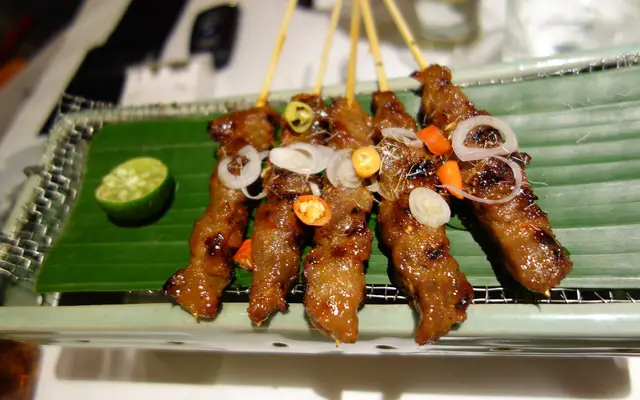
Sate Guide: Indonesian Satay Styles, Sauces and How to Order
Peanut sauce is only the start. Meet the regional styles of Indonesian sate and learn how to order them like a local.
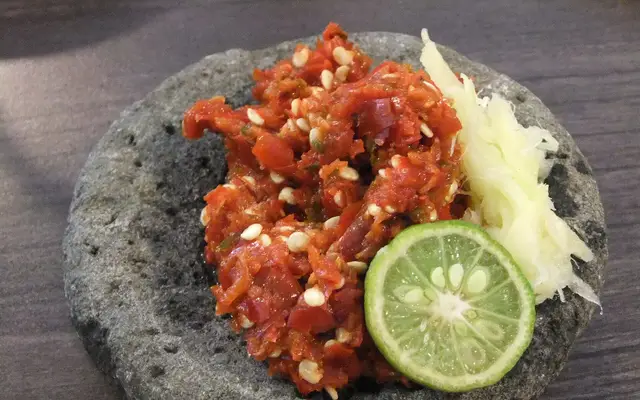
Sambal Guide: Indonesia's Chilli Sauces, From Terasi to Matah
Raw or cooked, sweet or sour, mild or fierce: a practical guide to the chilli sauces on every Indonesian table.
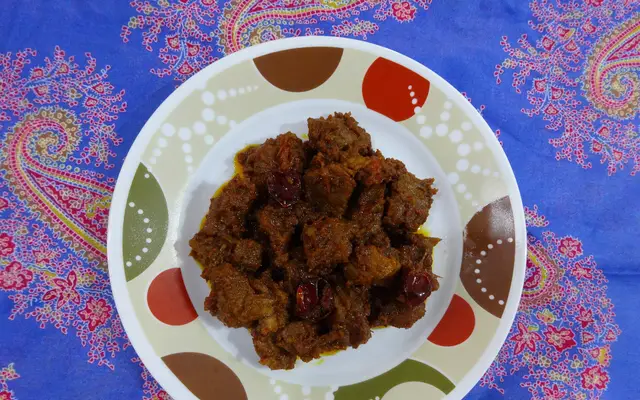
Regional Indonesian Dishes to Try, From Aceh to Manado
Indonesia is many cuisines in one. Here are the regional dishes worth seeking out, and what makes each region taste different.