
Indonesian Food · Guide
Sambal Guide: Indonesia's Chilli Sauces, From Terasi to Matah
Raw or cooked, sweet or sour, mild or fierce: a practical guide to the chilli sauces on every Indonesian table.
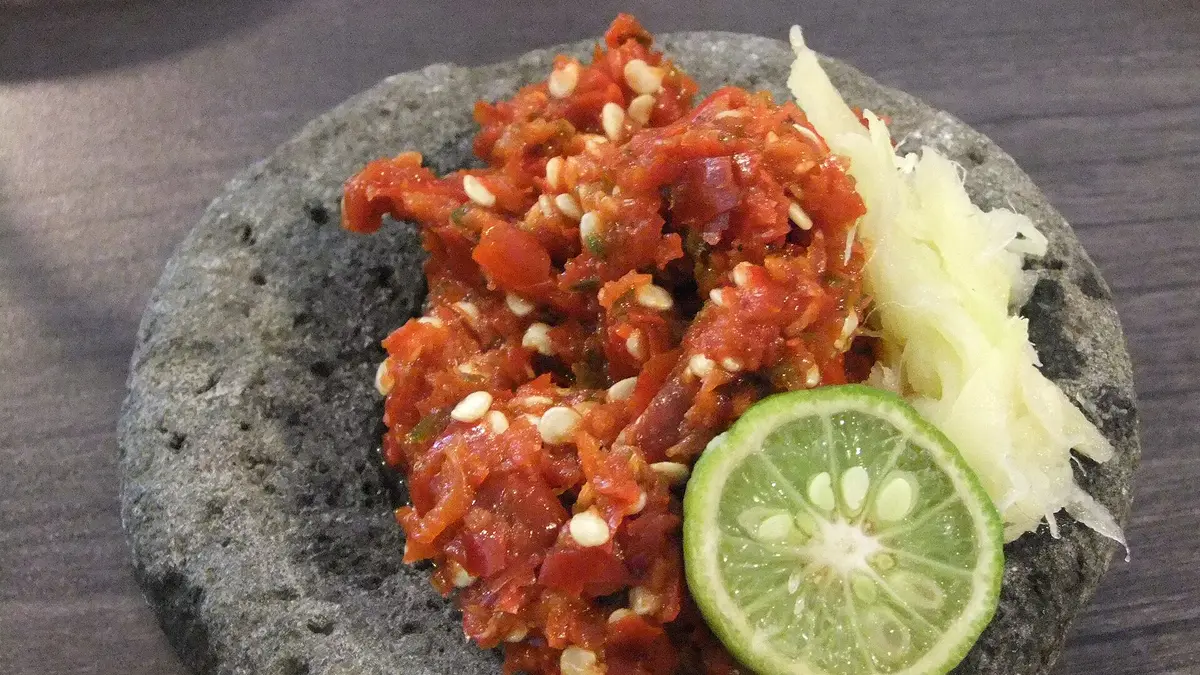
In Indonesia, a meal without sambal can feel unfinished. The word covers a huge family of chilli-based sauces and relishes, from a quick crush of raw chilli and salt to slow-fried pastes that keep for weeks. Every region, and very nearly every household, has its own preferences. Sambal is not one flavour but a way of adding heat, acidity, saltiness, sweetness and aroma to a plate, and the right one can change how a whole dish tastes. This guide covers the main types, how they differ, and how to make and store sambal safely at home.
What goes into sambal
Most sambal start with chillies, usually a mix of large red chillies (cabai merah) for colour and body and small bird’s-eye chillies (cabai rawit) for sharp heat. From there, cooks add some combination of:
- Shallots and garlic, raw or fried
- Terasi, fermented shrimp paste, toasted before use
- Tomato, for sweetness, acidity and volume
- Gula Jawa (palm sugar) or plain sugar
- Lime or calamansi juice (jeruk nipis or jeruk limau)
- Salt, always
- Aromatics such as lemongrass, lime leaves or torch ginger
The two big decisions are whether the sambal is raw (sambal mentah) or cooked (sambal masak or sambal goreng), and whether it is ground into a paste or simply chopped and mixed.
Common types of sambal
Sambal terasi
Probably the most widespread sambal in Java. Chillies, shallots, tomato and toasted shrimp paste are ground together, with salt, sugar and a squeeze of lime. It can be served raw or briefly fried. Its deep savoury note makes it the classic partner for lalapan (raw vegetables), fried chicken and grilled fish.
Sambal matah
From Bali, sambal matah is a raw relish rather than a paste. Finely sliced shallots, bird’s-eye chillies, lemongrass and lime leaves are tossed with salt, lime juice and hot coconut oil, often with a little toasted shrimp paste. It is crunchy, sharp and fragrant, and especially good with grilled fish and chicken.
Sambal ijo
The green sambal of West Sumatra, made from green chillies, green tomatoes and shallots, roughly pounded and cooked in oil. It is less fiery than many red sambal, with a slightly sour, grassy flavour, and is a fixture on Padang restaurant tables. See our guide to gulai and Minang cuisine for the dishes it accompanies.
Sambal bajak
A cooked Javanese sambal in which red chillies, shallots, garlic, candlenut, terasi and palm sugar are ground and fried slowly until dark and glossy. It is sweeter and deeper than raw sambal and keeps well, which makes it a common pantry staple.
Sambal dabu-dabu
A fresh, salsa-like sambal from Manado and North Sulawesi. Diced tomatoes, shallots and bird’s-eye chillies are mixed with lime or calamansi juice and sometimes a little hot oil. It is bright and juicy and is traditionally served with grilled seafood.
Sambal kecap
Sweet soy sauce (kecap manis) with sliced chillies, shallots and sometimes tomato and lime. It is the default dipping sauce for many grilled dishes and is a gentle option for anyone building up their tolerance. It is often served with sate and fried fish.
Sambal roa
Another Manado speciality, made from smoked roa fish (a type of garfish or halfbeak) flaked and fried with chillies, shallots and garlic. It is smoky, savoury and usually very hot, and many people treat it as a topping for plain rice.
A few others you will meet
- Sambal bawang: chilli and garlic fried in oil, popular with fried chicken.
- Sambal kacang: a peanut-based sambal for gado-gado, siomay and some satays.
- Sambal tempoyak: made with fermented durian, found in parts of Sumatra and Kalimantan.
- Sambal andaliman: from North Sumatra, using the citrusy, tingling andaliman pepper.
How heat and sweetness vary
| Sambal | Raw or cooked | Typical heat | Sweetness |
|---|---|---|---|
| Terasi | Either | Medium to high | Low to medium |
| Matah | Raw | High | Low |
| Ijo | Cooked | Medium | Low |
| Bajak | Cooked | Medium | High |
| Dabu-dabu | Raw | High | Low |
| Kecap | Raw | Mild to medium | High |
| Roa | Cooked | High | Low |
As a broad pattern, Central Javanese sambal tend to be sweeter, while Manado, Bali and West Sumatra lean hotter and sharper. Heat also depends on the ratio of bird’s-eye chillies to larger chillies and whether seeds are left in, so the same name can produce very different results.
Sambal in modern cooking
Sambal has moved well beyond the side dish. Ayam geprek, fried chicken smashed into a sambal bawang, became one of the most popular casual meals in Indonesian cities. Cafés serve sambal matah on pasta and toast, burgers come with sambal mayonnaise, and fast-food counters in Indonesia routinely offer sambal alongside or instead of ketchup. The sweet-spicy combination also reaches desserts: rujak, fresh fruit with a palm sugar and chilli dressing, is a traditional example, and some modern dessert makers experiment with chilli in chocolate, caramel or ice cream. Bottled sambal from large brands is a pantry staple both in Indonesia and abroad.
Making sambal at home
- Use a cobek and ulekan if you can. The traditional stone mortar and pestle crushes rather than chops, giving a better texture. A small blender or food processor works for cooked sambal; add a little oil to help it move.
- Toast terasi first. Dry-fry or roast a small piece of shrimp paste until fragrant and crumbly. Open a window, as it is pungent.
- Fry cooked sambal patiently. Cook the paste in oil over medium-low heat until it darkens and the oil separates. Undercooked paste tastes raw and spoils faster. Our bumbu basics guide covers the same technique for spice pastes.
- Season at the end. Balance salt, sugar and lime after cooking, tasting as you go.
If you are stocking up on terasi, palm sugar and candlenuts, our Indonesian pantry essentials list explains what to look for, including substitutes outside Indonesia.
Storing sambal safely
- Raw sambal (matah, dabu-dabu, fresh terasi) is best eaten the day it is made. Keep leftovers covered in the fridge and use them within a day or two.
- Cooked sambal fried thoroughly in oil keeps longer in a clean, airtight jar in the fridge. Always use a clean, dry spoon.
- Do not store raw garlic, shallots or chillies in oil at room temperature, as this can create conditions for harmful bacteria. Refrigerate homemade oil-based sambal.
- Throw away any sambal that smells sour when it should not, fizzes, or shows mould.
- Cooked sambal can be frozen in small portions, such as in an ice-cube tray.
Handling chillies safely
Wear gloves when cutting large quantities of chilli, and avoid touching your eyes or face. Wash hands, boards and knives well afterwards. Frying chilli can release fumes that make people cough, so ventilate the kitchen and keep children at a distance while you cook. When making sambal with children, let them help with mild tasks such as measuring tomatoes or sugar, and keep the cutting and grinding of chillies for adults. For a gentle approach to introducing heat at the table, see our guide to introducing children to Indonesian flavours.
Frequently asked questions
Is sambal the same as chilli sauce?
Sambal is a broader term. Some sambal are smooth sauces, but many are chunky relishes or pastes with shrimp paste, tomato, herbs or fish, and they are often made fresh for each meal.
Is sambal vegetarian?
Not always. Many sambal contain terasi (shrimp paste), and sambal roa contains fish. Ask before ordering, or look for sambal bawang or sambal ijo made without shrimp paste.
How do I tone down a sambal that is too hot?
Add more tomato, shallot, a little sugar or a squeeze of lime. Eating it with plenty of rice, cucumber or a coconut-milk dish also helps.
Keep reading
Bumbu Basics: How to Make Indonesian Spice Pastes at Home
The three base spice pastes behind countless Indonesian dishes, and how to grind, fry and freeze them.
Indonesian Pantry Essentials: What to Stock and How to Substitute
The sauces, aromatics and staples behind Indonesian home cooking, with practical substitutes and storage advice.
Sate Guide: Indonesian Satay Styles, Sauces and How to Order
Peanut sauce is only the start. Meet the regional styles of Indonesian sate and learn how to order them like a local.