
Food & Travel · Guide
Baso Tahu and Siomay Bandung: What They Are and How to Order Them
Steamed fish-stuffed tofu, dumplings and peanut sauce: a clear guide to Bandung's baso tahu and siomay, and how to order them.
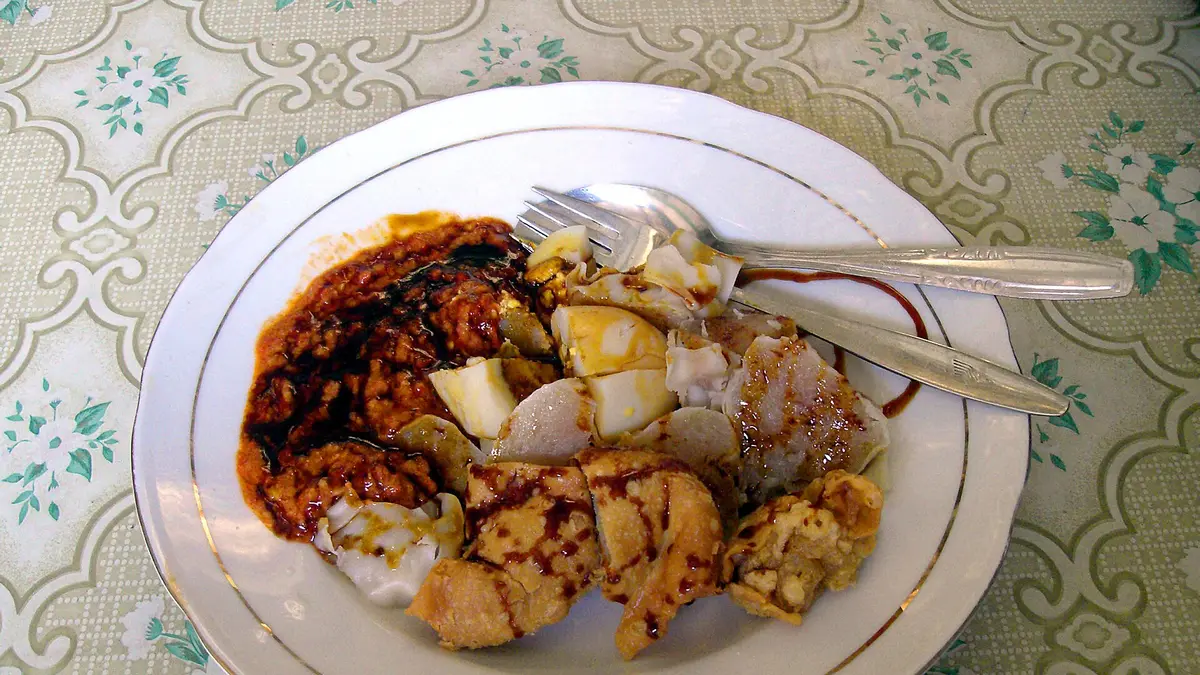
Few snacks say Bandung quite like a plate of baso tahu: squares of tofu stuffed with a savoury fish paste, steamed until soft, cut into pieces and smothered in peanut sauce. It shares a cart, a steamer and a sauce with siomay, and the two are so closely linked that many vendors sell them together. This guide explains what is in each component, how they connect to the Cantonese dumplings they descend from, what the fried cousin batagor is, and how to order with confidence at a cart or a sit-down shop.
What baso tahu is
The name combines baso, the Sundanese spelling of bakso (meatball), with tahu (tofu). The core item is a piece of tofu that has been slit or hollowed and filled with a paste made mainly from fish, usually mackerel such as tenggiri, mixed with tapioca starch, garlic and seasoning. The tapioca gives the filling its springy, slightly bouncy texture. The stuffed tofu is then steamed, which keeps the outside soft and lets the fish paste set.
A typical plate of baso tahu is a mix of several steamed items, not just tofu:
| Component | What it is |
|---|---|
| Tahu isi (stuffed tofu) | Tofu filled with fish and tapioca paste, steamed |
| Siomay | Rounds of fish paste, often wrapped in thin dumpling skin |
| Kol (cabbage) | Cabbage leaves rolled around fish paste, or simply steamed |
| Pare (bitter melon) | Bitter melon stuffed with fish paste; an acquired taste for some |
| Kentang (potato) | Steamed potato slices that soak up the sauce |
| Telur (egg) | Hard-boiled egg, sometimes wrapped or stuffed |
Everything is cut into bite-size pieces with scissors or a knife, then dressed.
The sauce and condiments
The peanut sauce is what ties a plate together. It is made from fried or roasted peanuts ground with garlic, chilli, palm sugar and salt, loosened with water to a pourable consistency. It is usually less thick and sweet than the sauce on sate, and closer in spirit to the dressing on gado-gado, which you can try making with our gado-gado recipe.
On top, most vendors add:
- Kecap manis (sweet soy sauce) in a thin drizzle
- Sambal for heat, usually a simple fresh chilli paste
- A squeeze of jeruk limau (small lime) to cut the richness
You control the sambal, so the dish can be as mild or as fiery as you like. If you want to understand the range of chilli condiments you will meet in Indonesia, our sambal guide is a good companion.
How it relates to Cantonese shumai
Siomay is the Indonesian name for the dumpling known in Cantonese as siu mai (often written shumai), a staple of dim sum. Chinese communities in Java adapted the idea over generations, and the version that took hold in West Java made two important changes:
- Fish instead of pork. Cantonese siu mai is traditionally pork and shrimp. In Indonesia, a majority-Muslim country, the street version shifted to fish, making it widely acceptable.
- Peanut sauce instead of soy and chilli oil. The local sauce turned the dumpling from a dim sum item into a full street meal, eaten with potatoes, cabbage and egg.
Baso tahu applies the same fish paste to tofu and vegetables, and Bandung became especially closely associated with this family of snacks. If you are curious about the original dumplings, our guide to Hong Kong dim sum covers siu mai in its Cantonese setting.
Baso tahu, siomay and batagor compared
| Dish | Cooking method | Key feature |
|---|---|---|
| Baso tahu | Steamed | Fish-stuffed tofu, served as a mixed plate |
| Siomay | Steamed | Fish dumplings, usually sold with the same extras |
| Batagor | Deep-fried | Short for bakso tahu goreng; the same idea, fried crisp |
Batagor is another Bandung favourite. The stuffed tofu and dumplings are deep-fried instead of steamed, giving a crunchy shell, and they are served with the same kind of peanut sauce, sometimes with a little broth on the side. Many visitors try both on the same trip to compare.
Where you will find it
In Bandung, baso tahu and siomay are sold from pushcarts with a large aluminium steamer, from small roadside stalls, and from dedicated shops, some of which have been trading for decades and sell vacuum-packed versions to take home. Carts also roam residential streets, and you will find siomay Bandung in food courts and on street corners across Jakarta and other cities. Our Jakarta street food guide covers where these carts tend to cluster in the capital.
We have not named specific shops here, as the editorial team has not visited them for this guide. If you have a particular long-running place in mind, check its current location and status on a map app before going.
How to order
Ordering is informal and flexible. At a cart, you can usually point at the pieces you want or simply ask for a mixed plate.
- “Campur” means mixed. A good default for a first try.
- Choose your pieces. Some vendors let you pick, for example more tofu and potato, no bitter melon.
- Heat level. “Pedas” means spicy, “sedang” medium, “tidak pedas” not spicy. Sambal is often added separately anyway.
- Sauce on the side. “Bumbunya dipisah” asks for the peanut sauce in a separate bag or bowl, useful for takeaway so the pieces do not go soggy.
- Takeaway. “Bungkus” means wrapped to take away. Carts typically pack the pieces in paper or a box with sauce in a small plastic bag.
Eat it with a fork or a spoon; at carts you will usually be handed a plate and a fork, sometimes a small skewer.
Practical notes
- Peanut allergy. The sauce is peanut-based and peanuts are handled throughout the cart. Anyone with a peanut allergy should avoid it unless they can be sure of a peanut-free alternative, and should speak to their doctor about risk.
- Fish and shellfish. The filling is fish-based; some versions add shrimp. Ask if you have a seafood allergy.
- Halal. Street baso tahu and siomay in West Java are typically fish-based and sold by Muslim vendors, but some Chinese-Indonesian restaurants serve pork siomay. If it matters to you, ask or look for halal signage.
- Hygiene. Choose carts with steady turnover where items are kept hot in the steamer. Our Bandung food guide has wider tips for eating around the city, including weekend traffic.
- Children. Bitter melon and sambal are easy to leave out, which makes baso tahu a reasonable choice for children who like mild, soft food. Cut pieces small for young children and check the sauce temperature first.
Frequently asked questions
Is baso tahu the same as bakso?
No. Bakso usually means meatballs in broth. Baso tahu uses a fish paste stuffed into tofu and vegetables, steamed and served with peanut sauce rather than soup.
What is the difference between siomay and batagor?
Siomay is steamed; batagor is the deep-fried version of similar fish-stuffed tofu and dumplings. Both come with peanut sauce.
Can I take baso tahu home from Bandung?
Many shops sell packed versions with sauce sold separately. Keep them cool, follow the seller’s storage advice and reheat thoroughly by steaming.
Is it spicy?
Only as spicy as you ask for. The peanut sauce may have a little chilli, but most of the heat comes from sambal that you can skip.
Keep reading
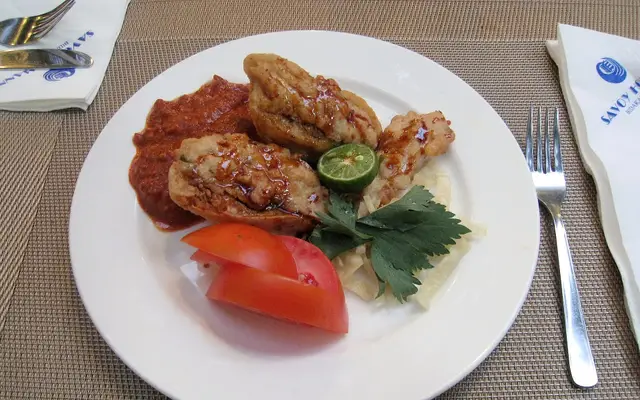
Bandung Food Guide: Sundanese Dishes, Street Snacks and Lembang Trips
Sundanese cooking, tapioca snacks, dessert cafés and a Lembang day trip: how to eat well in Bandung and dodge the weekend traffic.
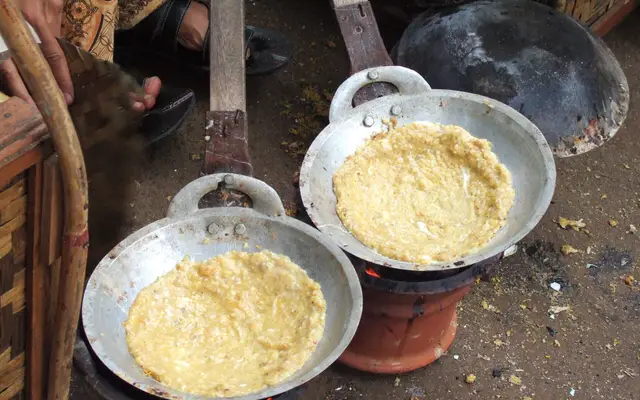
Jakarta Street Food Guide: What to Eat, Where to Look and How to Order
From kerak telor to late-night martabak, the dishes that define Jakarta street food and how to order them with confidence.
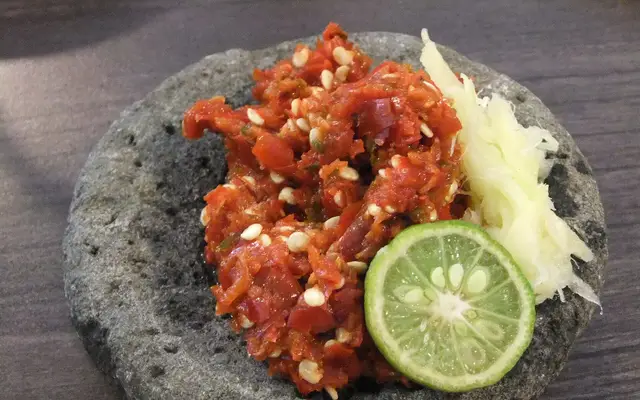
Sambal Guide: Indonesia's Chilli Sauces, From Terasi to Matah
Raw or cooked, sweet or sour, mild or fierce: a practical guide to the chilli sauces on every Indonesian table.