
Family Dining · Guide
Age-Appropriate Kitchen Tasks for Kids: A Guide by Age Band
From washing kangkung at two to cooking nasi goreng at twelve: a realistic, safety-first guide to kitchen tasks by age.

Children can help in the kitchen far earlier than many parents expect, as long as the task matches their hands, their attention span and the hazards in the room. A two-year-old can wash long beans in a basin. A ten-year-old can cook telur dadar with an adult nearby. A teenager can plan and cook a family dinner. This guide sets out sensible tasks by age band, with examples from a typical Indonesian home kitchen, and is clear about which jobs adults should keep for themselves.
How to use this guide
Children develop at different speeds, so treat the age bands as a rough starting point rather than a checklist. A careful six-year-old may be ready for a child-safe knife before an impulsive eight-year-old. Watch for three things before moving on to a new task: can the child follow a two-step instruction, stay focused on the job, and stop immediately when asked?
Every task here assumes an adult is present and paying attention. Supervision gets lighter as skills grow, but it never disappears entirely around heat, sharp blades or hot oil. If you are new to cooking with children, our introduction to cooking with children in an Indonesian kitchen covers how to set up a safe workspace first.
Kitchen tasks at a glance
| Age band | Good tasks to try | Indonesian kitchen examples | Adults keep control of |
|---|---|---|---|
| 2–3 | Washing, tearing, pouring, simple stirring of cold food | Washing kacang panjang in a basin, tearing bayam leaves, sprinkling bawang goreng | All heat, all knives, the ulekan, raw meat and egg |
| 4–5 | Mashing, rolling, peeling, measuring, cutting soft food with a nylon knife | Mashing potato for perkedel, rolling klepon dough, peeling boiled eggs, rinsing rice | Stove, oven, sharp knives, hot water dispensers |
| 6–8 | Following a simple recipe, measuring accurately, first knife skills, assembling dishes | Peeling shallots and garlic, assembling gado-gado, threading sate onto blunt skewers, packing a lunchbox | Frying, boiling liquids, sharp knives except under close guidance |
| 9–12 | Supervised stove cooking, sharper knives, using appliances, making a simple dish | Cooking telur dadar or nasi goreng, running the rice cooker start to finish, making a mild sambal with gloves | Deep-frying, the pressure cooker, carrying pots of hot oil or boiling water |
| Teens | Planning and cooking full meals, food safety, shopping | Cooking a family dinner, making bumbu from scratch, shopping at the pasar with a list | Gradually less, after clear instruction on deep-frying and pressure cooking |
Ages 2–3: hands and senses
Toddlers learn with their whole bodies, so tasks should be tactile and forgiving. Set them up at a low table or on a mat with a basin of water, a colander and a towel. Good jobs include washing vegetables and fruit, tearing leafy greens, snapping long beans into pieces, pouring pre-measured dry ingredients into a bowl and stirring cold mixtures.
Keep tasting to cooked or ready-to-eat foods and cut anything round into small pieces. Sessions of five to ten minutes are plenty.
Ages 4–5: simple tools
Preschoolers can handle more steps and simple tools. They can rinse rice in the pot and pour off the cloudy water, crack eggs into a separate bowl (then wash their hands), peel boiled eggs and bananas, mash potatoes, and roll dough for klepon or onde-onde. A nylon or child-safe serrated knife works for soft foods such as tofu, banana and cooked potato.
They can also help with the ulekan if an adult steadies the cobek and the ingredients are soft, such as cooked potato or boiled shallots. Measuring cups and spoons are perfect at this stage, because counting scoops builds early maths.
Ages 6–8: first real skills
Children in this band can start following a short written or picture recipe. Teach the bridge and claw holds and let them move from a child-safe knife to a small, sharp paring knife on stable foods such as cucumber, with an adult right beside them. Other good jobs include peeling shallots and garlic, grating carrot with a box grater (stopping well before their knuckles reach the blades), assembling gado-gado, and packing their own lunchbox. Our Indonesian lunchbox ideas include combinations children can put together themselves.
Threading sate is a popular job. Use skewers with the sharp tips trimmed, and if the meat is raw, wash hands and surfaces thoroughly afterwards.
Ages 9–12: heat with supervision
Many children in this range are ready for the stove, with an adult in the kitchen. Start with low-risk dishes that cook quickly in a frying pan, such as telur dadar or nasi goreng with a small amount of oil. Teach them to keep pan handles turned inward, to add ingredients gently away from their body, and to switch off the gas before leaving the stove.
They can run the rice cooker from rinsing to serving; our guide to cooking rice well covers the basics and how to store cooked rice safely. They can also make a mild sambal or simple spice paste while wearing gloves, using our bumbu basics guide as a reference. Deep-frying gorengan and using a pressure cooker (panci presto) remain adult jobs at this age.
Teenagers: running the kitchen
Teenagers can plan a menu, write a shopping list, shop at the pasar or supermarket, and cook a complete meal. This is the time to teach food safety in more depth: keeping raw and cooked foods apart, cooling and refrigerating leftovers promptly in hot weather, and reheating food until it is steaming hot throughout.
Introduce deep-frying and the pressure cooker deliberately, with an adult demonstrating first and staying nearby until the teen is confident. Giving older children real responsibility, such as planning and cooking one family dinner a week, builds confidence that carries well beyond the kitchen.
Rules that apply at every age
- Wash hands with soap before cooking, after handling raw meat, fish or egg, and after touching chilli.
- Tie back long hair and roll up loose sleeves near the stove.
- No running in the kitchen, and no food in the mouth while walking around.
- Children never handle hot oil, and stay out of the kitchen while anything is deep-frying unless they are old enough to be taught.
- Check for allergies before using peanuts, shrimp paste, egg, soy or wheat, and ask a paediatrician if you have questions.
- Keep a basic first-aid kit in or near the kitchen and make sure every adult in the house, including any helper, knows what to do if a child is burned or cut.
Signs a child is ready for the next step
A child is usually ready for a harder task when they do the current one calmly and consistently, follow your safety reminders without being told twice, and ask to do more. If a child becomes anxious or overwhelmed, step back to easier tasks for a while; our guide to sensory-friendly cooking has ideas for cautious children.
Frequently asked questions
When can a child use a real knife?
Many children can begin with a small sharp knife on soft, stable foods somewhere around six to eight, after practising with a child-safe knife and learning the claw grip. Readiness depends on focus and control more than on age, and close supervision is essential at first.
Can young children help with the rice cooker?
Yes. Rinsing rice and measuring water are excellent tasks for preschoolers. Keep small hands away from the steam vent and the hot inner pot, and let an adult open the lid and serve until the child is older.
Is it safe for children to use the ulekan?
With supervision, yes. The stone is heavy, so place the cobek on a damp cloth on a low table, use soft ingredients at first, and keep fingers clear of the pestle.
Keep reading
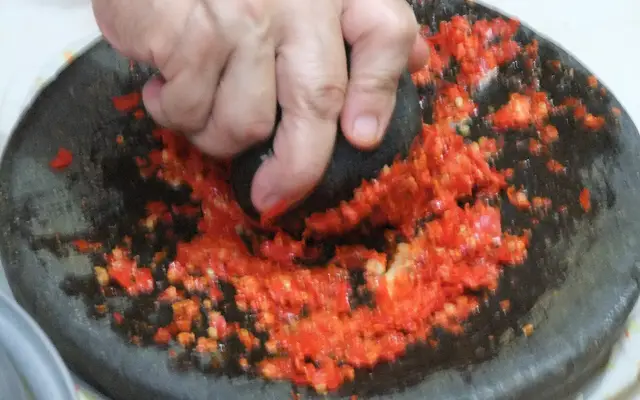
Cooking With Children in an Indonesian Kitchen: A Practical Start
Why cooking together is worth the mess, how to make a typical Indonesian kitchen safe for small helpers, and which dishes to try first.
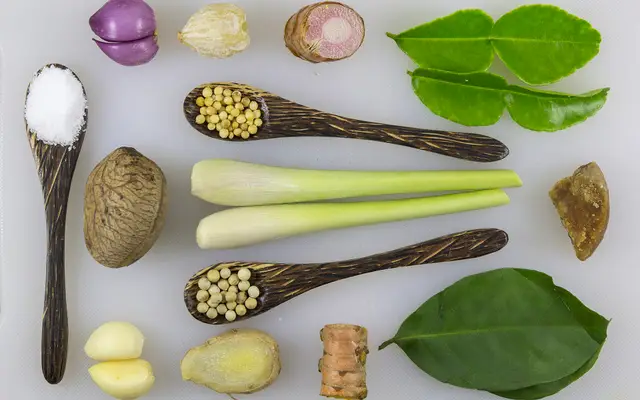
Sensory-Friendly Cooking With Kids Who Are Cautious Eaters
Texture play, smell games and counting with shallots: gentle, pressure-free ways to help cautious eaters get comfortable with food.

Recipes · Recipe
Indonesian Lunchbox Ideas for Kids, with Easy Perkedel Kentang
Soft potato fritters made for small hands, plus ten Indonesian-inspired lunchbox combinations and tips for keeping packed lunches safe in the heat.