
Family Dining · Guide
Cooking With Children in an Indonesian Kitchen: A Practical Start
Why cooking together is worth the mess, how to make a typical Indonesian kitchen safe for small helpers, and which dishes to try first.
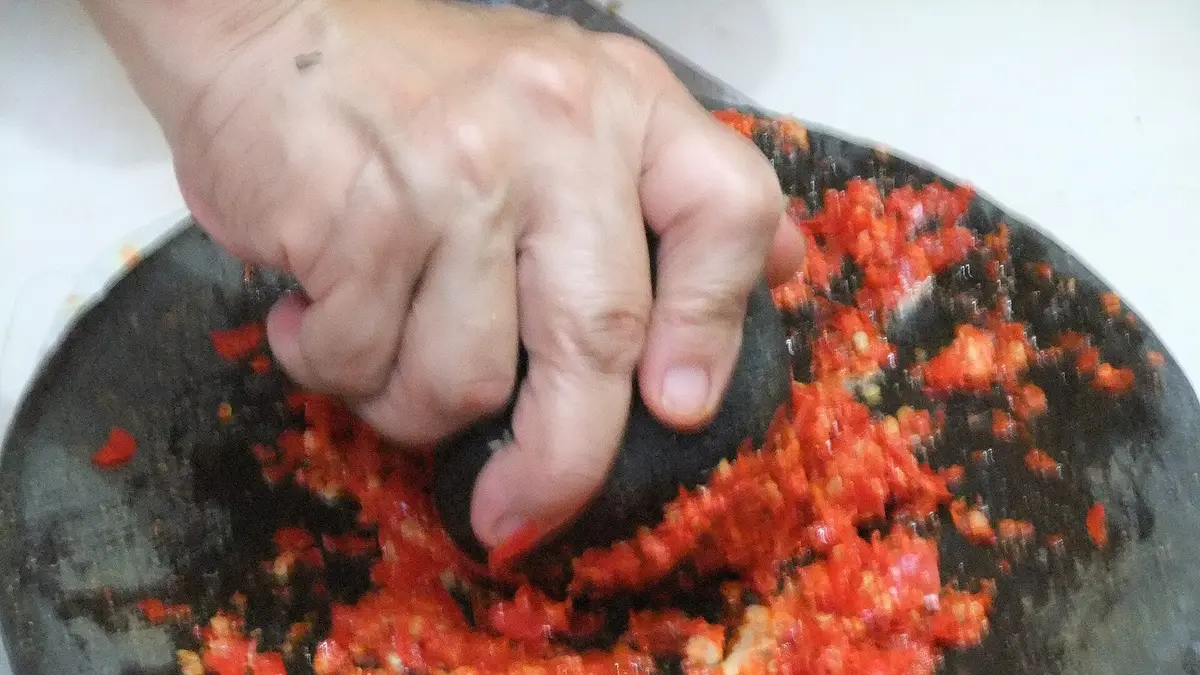
Indonesian home cooking is full of jobs that suit small hands: picking kangkung leaves off their stems, rolling klepon dough into balls, scattering bawang goreng over a bowl of soto, pressing the button on the rice cooker. Bringing children into the kitchen does not need special equipment or a cooking class. It needs some planning, a few firm safety rules, and a willingness to accept that the tempe will be cut into slightly uneven pieces. This guide covers why it is worth the mess, how to set up a typical Indonesian kitchen so children can help safely, and which dishes make good first projects.
Why cooking together is worth the effort
Children who help make a meal often feel more ownership of it, and many parents notice that a child is more willing to taste a vegetable they washed or a sauce they stirred. It is not a guarantee, and it works best when cooking is not used as a trick to get food eaten, but the kitchen is a relaxed place to meet new ingredients without anyone watching the plate.
There are other benefits too. Measuring rice and water is early maths. Following a recipe step by step builds reading skills and patience. Naming the smells of lemongrass and daun salam grows a child’s vocabulary. And in many Indonesian families, cooking is how recipes travel between generations: a grandmother’s sambal or the family’s Lebaran opor is learned by standing beside someone at the stove, not by reading a card.
Setting up the kitchen for small cooks
A stable working height
Most counters are too high for young children. A sturdy step stool with a wide base, or a kitchen helper tower with side rails, brings them up to the work. Avoid stacking plastic stools, which tip easily on tiled floors. Many families find it simpler to bring the work down instead: a low table or a mat on the floor with a chopping board, a bowl of water and the ingredients is often the safest station for under-fives, and it keeps them well away from the stove.
The hot zone
Indonesian kitchens often centre on a gas kompor and a wok, with plenty of frying for tempe, tahu, kerupuk and gorengan. Hot oil is the biggest hazard for children in this setting. A few rules help:
- Mark a no-go zone around the stove for young children, and keep them out of the kitchen entirely while anything is deep-frying.
- Turn pan handles inward so they cannot be knocked or grabbed.
- Keep the LPG cylinder and hose out of reach, and never let children play with the stove knobs.
- Treat the rice cooker as hot equipment. The steam vent can scald, and the inner pot stays hot long after it switches to warm. Children can press the button, then keep their hands away from the lid.
- Use the child lock on water dispensers with a hot tap, which are common in many homes.
Older children can learn to stir-fry with close supervision once the basics are second nature; our age-by-age kitchen tasks guide suggests a sensible order for introducing heat and knives.
The ulekan and the knives
The cobek and ulekan, the stone mortar and pestle, is a favourite with children who like doing something physical, but it is heavy. Set the cobek on a damp cloth so it does not slide, keep it in the middle of a low table rather than near an edge, and watch for pinched fingers. Crushing boiled potato, garlic or a few cooked candlenuts is a better first task than raw chilli.
For cutting, start with jobs that need no knife at all: tearing, snapping beans, peeling eggs and bananas. Then move to a nylon or child-safe serrated knife on soft foods such as tofu, boiled potato, banana and cucumber. Teach the bridge and claw holds for keeping fingers clear. Sharp kitchen knives and the heavy cleaver many households keep for chicken should stay with adults until a child is older and has shown steady control.
Hand-washing and the chilli rule
Wash hands with soap before starting, after touching raw chicken, egg or fish, and after any contact with chilli. Chilli oil lingers on skin and stings badly if it reaches the eyes, so young children should not handle cut chillies at all. Older children can wear disposable gloves and learn to keep their hands away from their faces until they have washed. Keep prepared chillies in a covered container that children know not to open.
Working alongside a helper
In many Jakarta households, an asisten rumah tangga (ART) does much of the daily cooking. Children often already spend time in the kitchen with her, which can be a real advantage, since she may know the family’s recipes better than anyone. Talk with your helper first and agree on the same rules: which tasks the children may do, that no young child stands near the frying wok, and that cooking with the children is a planned activity rather than something squeezed into a busy morning. Saying clearly who is supervising at any given moment avoids the gap where each adult assumes the other is watching.
Good first dishes to cook together
Choose dishes with plenty of hands-on steps and short cooking times. These suit most Indonesian kitchens:
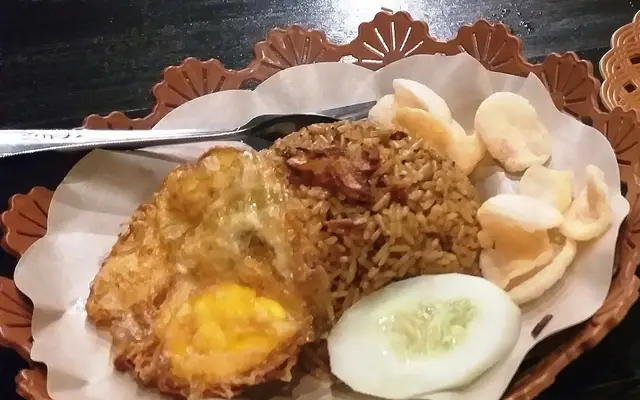
- Nasi goreng. Children can measure the leftover rice, crack eggs into a bowl and choose toppings, while an adult handles the hot wok. Our nasi goreng recipe includes a milder version for younger eaters.
- Gado-gado. Lots of washing, arranging and assembling with boiled vegetables, egg, tofu and lontong. The peanut sauce is the obvious allergy question, and the gado-gado recipe discusses a nut-free idea.
- Perkedel kentang. Mashing boiled potato and shaping small patties is ideal for little hands. An adult does the frying.
- Telur dadar. Beating eggs with chopped spring onion is a good early task, and older children can learn to cook the omelette themselves.
- Klepon or dadar gulung. Wrapping pandan dough around gula jawa, or rolling coconut-filled pancakes, is the kind of fiddly job many children enjoy. Our Indonesian desserts guide explains both. Klepon release hot syrup when bitten, so let them cool well before children eat them.
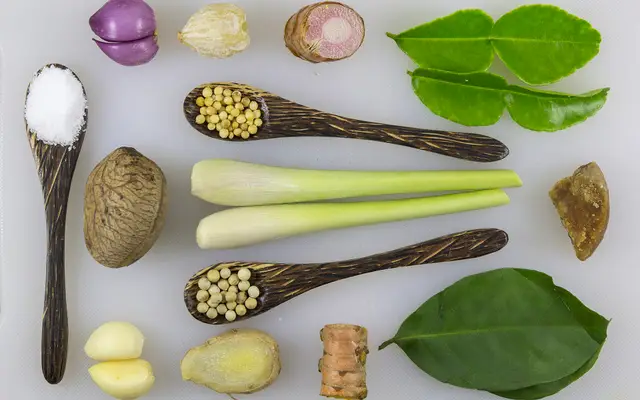
- A simple bumbu. Older children can peel shallots and garlic and watch a spice paste come together. The bumbu basics guide explains how the main pastes differ.
Allergens and choking hazards
Indonesian cooking uses several common allergens: peanuts (sauces for sate, gado-gado and pecel, plus rempeyek), shrimp and fish (terasi, ebi, petis and fish crackers), soy (kecap, tempe and tahu), egg, and wheat in many noodles. If any child in the house, or a visiting friend, has an allergy, leave those ingredients out of the session and wipe surfaces before you start. For questions about allergies or introducing allergenic foods, ask your paediatrician.
For children under about four, cut round foods such as bakso, cherry tomatoes and grapes into small pieces lengthwise, avoid whole nuts, and be cautious with small firm jelly cups, hard sweets and very hard kerupuk. Tasting happens sitting down, never while walking around.
Keeping it enjoyable
Keep sessions short at first; fifteen minutes of real involvement beats an hour of waiting for a turn. Prepare ingredients before calling the children in, praise effort rather than results, and let them eat what they made even when it is lopsided. Clearing up together is part of the activity too.
Frequently asked questions
What age can children start helping in the kitchen?
Toddlers of around two can wash vegetables, tear leaves and stir cold ingredients with an adult right beside them. When to introduce knives and heat depends more on a child’s focus and coordination than on a birthday.
Should children taste raw ingredients while cooking?
Avoid raw egg, raw batter or dough, and anything that has touched raw meat or fish. Cooked components and foods meant to be eaten raw, such as washed cucumber or fruit, are fine to sample.
Keep reading

Age-Appropriate Kitchen Tasks for Kids: A Guide by Age Band
From washing kangkung at two to cooking nasi goreng at twelve: a realistic, safety-first guide to kitchen tasks by age.
Recipes · Recipe
Nasi Goreng Recipe: Home-Style Indonesian Fried Rice for the Family
Smoky, sweet-savoury Indonesian fried rice made with day-old rice, a simple spice paste and kecap manis, with a mild option for kids.
Sensory-Friendly Cooking With Kids Who Are Cautious Eaters
Texture play, smell games and counting with shallots: gentle, pressure-free ways to help cautious eaters get comfortable with food.